
Your Comprehensive Homebuying Checklist
MAY 29, 2024 | Home Care Buzz Experts | 8 minute read
For most Americans, their home is their largest purchase. That makes preparing for, searching for, and buying a home exciting and somewhat overwhelming. If you've never purchased a house before or it's been a while, we've built a comprehensive homebuying checklist for you.
Buying a home may seem easy on the remodeling shows, but it requires a lot of preparation, knowledge, and specific steps. You don't have to go it alone. Read through our homebuying process checklist and then get started. This list works as both a first-time homebuyer checklist and an experienced homebuyer checklist. We've also included a printable homebuying checklist PDF you can take with you when viewing homes.
Let's get started.
Get Your Financial House in Order
Before you start window shopping on Zillow or Redfin, make sure you're financially prepared to buy a home.
Save for a Down Payment
First, determine how much you want to save for a down payment. You don't necessarily need to save 20% of a home's cost for a down payment. (Most first-time homebuyers put down 8%). However, you'll likely need mortgage insurance if you put down less than 20%. Also, the less you put down, the higher your monthly mortgage will be. Putting down more money may also lead to a lower interest rate.
How much do you need to put down? Conventional loans require a minimum of 3% down, while Federal Housing Administration (FHA) loans require 3.5% down (if your credit score meets a specific minimum). Certain loans, like VA and USDA loans, require no down payment.
Build Your Credit Score
Next up on our homebuying checklist is building credit. While you may be able to get an FHA loan with a credit score as low as 500, it's a good idea to boost your credit score as much as possible before shopping for a home. Conventional loans require a credit score of at least 620, and you may qualify for a lower interest rate and better loan terms with a score in the 700s or above.

Pro tip: Lower interest rates can save you tens of thousands of dollars in interest payments over the life of your loan, so keep an eye on your credit score. If it's not where you want it to be, learn how to increase your credit score.
Find Your Debt-to-Income Ratio
Your debt-to-income ratio (DTI) is the amount of your debt divided by your gross income. In other words, if you add up all your bills, like your car payments, credit card bills, student loan payments, etc., and divide that by your income before taxes, you'll get your DTI.
Most lenders don't want to see a DTI higher than 43%. A lower DTI will help prove you can pay your mortgage. If your DTI is high, you may need to take some time to pay down loans and credit cards or to find ways to increase your income.
Get Preapproved for a Loan
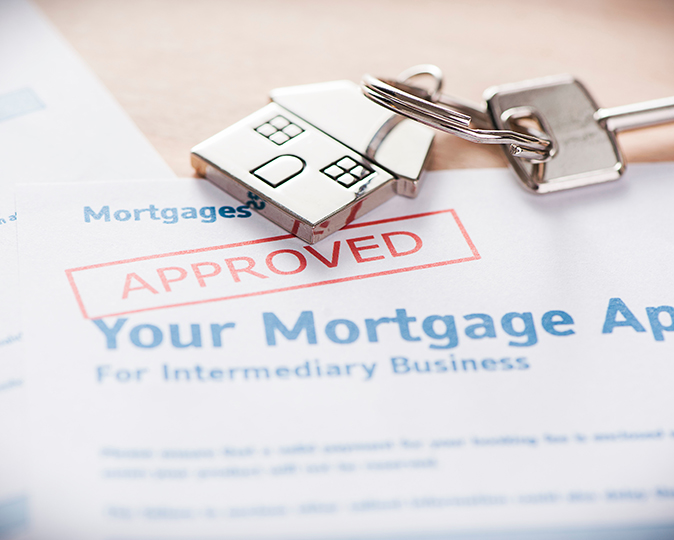
Getting preapproved for a loan provides you with two big benefits. First, a preapproval shows home sellers you are serious, which can help strengthen your offer. Second, it gives you important insight into how much house you can afford.
Important note: Just because a lender approves you for a certain amount doesn't mean that number should automatically be your housing budget. Take some time to consider how much you feel comfortable paying each month on your mortgage and choose a number that's right for you. Learn more about how much house you can afford to buy.
Contact your bank, local credit union, or mortgage broker to start the process. Be prepared to gather and submit lots of documents, including:
- Pay stubs
- Bank statements
- Tax documents
- W-2s
- Investment statements
- Any other documents requested
The preapproval process can take a few days to a few weeks. To get the best terms possible, compare at least three lenders.
If things go your way, you should receive a shiny preapproval letter from your lender. (OK, it might not be shiny, but it's still exciting to receive.)
Related: Learn how to find the right mortgage lender
Work With a Real Estate Agent
The most important member of your homebuying team is your real estate agent. This person will be your teacher, guide, and number-one advocate.
How do you choose a real estate agent? Pick someone who:
- Has multiple years of sales under their belt
- Is deeply familiar with the area you want to buy
- Has worked with buyers like you (first-time home buyer, military, single person, or other)
- You feel comfortable working with
Ask friends and family members for referrals and consider interviewing at least two or three agents before settling on the right agent for you.

Define Your Target Property
Your next homebuying process checklist item: start deciding what properties you want to view. You should define your “must-haves” versus “nice-to-haves” so you understand where you're willing to compromise when you begin your home search.
Questions to consider when viewing properties:
- What area do you want to live in?
- How long is the commute?
- How many bedrooms and bathrooms do you need?
- What style of home do you prefer?
- Do you need a fenced yard?
- Do you have a preferred school district?
- Where are the closest parks, hospitals, and other amenities?
- Are you willing to consider a fixer-upper?
Start House Hunting
Once you've described your ideal property, it's time to start house hunting. A good real estate agent should send you properties that meet most of your criteria. They may also show you “pocket listings” or houses not yet on the market. If you think a home has potential, your agent will line up a tour.
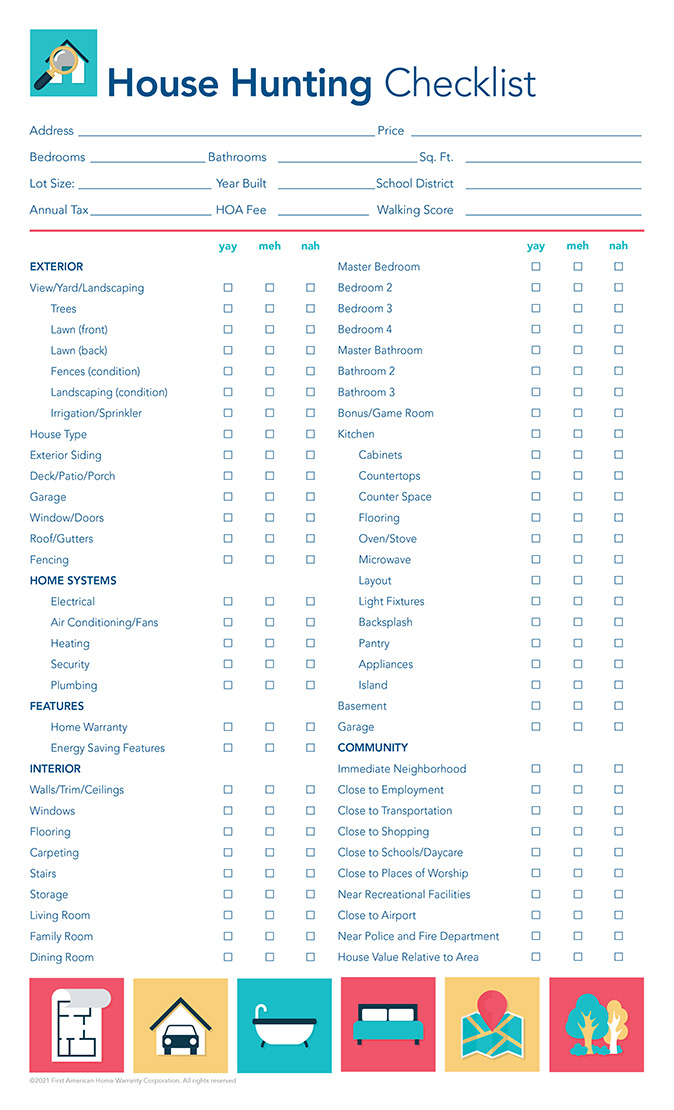
Reviewing multiple houses can be exciting but also overwhelming. It can be easy to forget the individual details of each house you view. To help, at the end of this article is a printable house-hunting checklist you can use for each home you view.
Use this list to record your observations and feelings about each house you view. Reviewing the sheets after a long day of house hunting can be helpful. For information on how to find a house regardless of market conditions, check out our other house-hunting tips.
Make an Offer
Once you've found a house that checks all your most important boxes, it's time to make an offer. If houses are going fast, you may need to work with your agent to make an aggressive offer over the asking price with some seller incentives. You may need to make offers on multiple properties until you get that golden acceptance (especially in a hot seller’s market). If you're lucky enough to be in a buyer's market or if the seller is highly motivated, you can make a lower offer or ask for better terms.
Your Offer Is Accepted
In most cases, your offer will have some contingencies or protections that allow you to back out of the deal at specific points in the “due diligence” process.
Get an Inspection
A professional inspector will look at all the major systems of the house, including:
- HVAC system
- Electrical
- Plumbing
- Roof
- Foundation
If possible, you or your real estate agent should attend the inspection so you can ask questions and the inspector can explain any findings. (Learn what to ask your home inspector at the inspection.)
Following the inspection, the inspector will send you a report. If the inspection uncovers any major issues, you may renegotiate with the seller. You can either ask the seller to fix the issue or give you a credit to lower the cost of the property. Once that negotiation is complete or if the inspection comes back clean, you can release your inspection contingency.

Note: Depending on the type of financing you're using, the seller may be required to fix certain inspection findings before the sale.
Get an Appraisal
Most mortgage lenders require an appraisal before lending you money to buy a home. The average cost of an appraisal is $500. The appraiser will look at comparable home sales in the area and inspect your house to provide an estimated property value. The lender wants to ensure the appraisal comes in at or above the sale price. If the appraisal is less than your offer, you'll have to negotiate a lower price with the seller, back out of the deal, or find a way to cover the difference. Working with a good real estate agent can help you avoid this.
Prepare to Close
You're almost to the finish line. You've already crossed off most of the items on your homebuying checklist. As you close the sale, your title company will perform a title check to ensure no one else has a claim to your house.
Related: What is title insurance, and why do you need it?
During this time, your mortgage lender will also work behind the scenes to ensure all the Is are dotted, and Ts are crossed for your closing. Do not open new lines of credit, take out loans, or leave your job during this process. You can do all that once you have the keys to your home in hand. Learn more about what homebuyers can expect in the closing process.
Perform the Final Walkthrough
Just before closing, you and your real estate agent will have the opportunity to perform a final walkthrough of your soon-to-be house. Take this opportunity to check that the house is the way you remember it. For example, if the seller agrees to leave the appliances, ensure they're there. This is an excellent opportunity to take pictures of the house when it's empty and to do some measuring as you begin planning your new setup.
Take a look at our final walkthrough checklist and tips for home buyers for more tips.
Closing Day
On this happy day, get ready to sign, sign, and sign again. You may go to your title agent's office in person to sign your closing documents, or a notary may bring them to your house. These days, eClosings are also becoming more popular.
Take your time when signing and reviewing the documents. Ensure all the numbers, like the final sales price, interest rate, and monthly payment, are correct. The escrow agent or notary should be able to answer any questions you have.
You may also be expected to bring a check or cashier's check to cover your closing costs. When the final document is signed, the property will be transferred to you. Congratulations, homeowner!

Related: How much are closing costs for buyers?
Consider a Home Warranty to Protect Your New Home
We hope this homebuying checklist can be a helpful tool as you prepare for your house-hunting journey. You can also show this homebuying process checklist to your real estate agent if you have any questions or want a further explanation on any step.
Our final advice before you dive into the house-hunting process is not to overlook the value of a home warranty. In many cases, your real estate agent can negotiate with a seller to purchase a home warranty on your behalf as part of your home sale. If not, you can purchase a home warranty for your new home.
A First American real estate home warranty can give you peace of mind. After all, even the best home inspections don't always catch everything. A home warranty can protect your budget after your home purchase and beyond, so you've got a repair and replacement solution when covered appliances and home systems unexpectedly break.
Print Checklist
The contents of this article are provided for general guidance only. First American Home Warranty does not assume any responsibility for losses or damages as a result of using this information.



Keep Reading









Home Care Buzz Experts
The First American Home Care Buzz team is made up of experienced home warranty writers and editors. Our team provides valuable insights and information to help homeowners like you meet the daily challenges of homeownership.
This article is about...