
Easy Guide: How to Clean Dishwasher Filters
FEBRUARY 27, 2024 | Home Care Buzz Experts | 6 minute read
Project Overview

Beginner

1 Hour

< $150
All Values are Estimates
Are you trying to locate the source of that funky smell in your kitchen? It could be a place many people are unaware of – the dishwasher filter. Didn't know your dishwasher had a filter? Or maybe you're wondering, “Where is the filter in a dishwasher, anyway?” Don't worry, you're not alone. But if your kitchen has lingering, unpleasant odors, your dishes aren't getting clean, or your dishwasher isn't draining, it's probably time to clean the dishwasher filter. Don't be discouraged if this is the first time you've heard about the task; we'll walk you through all the steps, and you'll be done in no time!
What is a Dishwasher Filter?
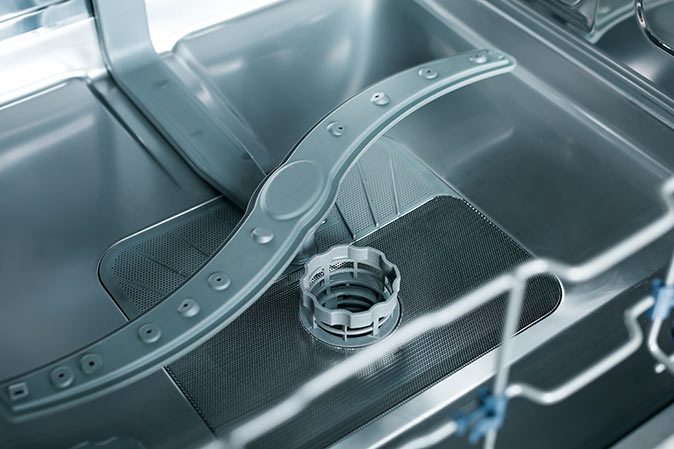
A dishwasher filter is a small part of your dishwasher (usually at the bottom) that catches food particles and other debris present during the cleaning cycle. Depending on your dishwasher model, it often resembles a plastic grate covering a cylinder. Catching these particles ensures they don't fly around in the dishwasher cycle and end up stuck to your clean dishes. But it also means the filter needs to be cleaned regularly to avoid clogs and keep your appliance working properly.
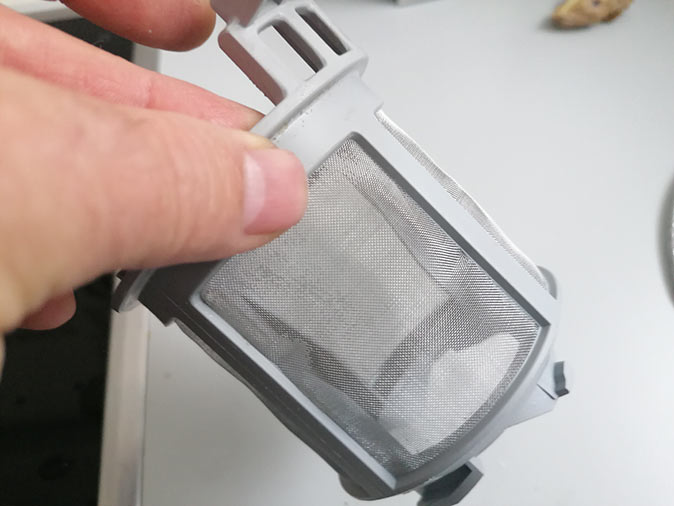
Types of Dishwasher Filters
While they serve the same function, there are two different types of dishwasher filters. Let's go over the differences before diving into how to clean them.
Self-Cleaning Dishwasher Filter
Self-cleaning filters can often be found in machines over ten years old. They contain a unique grinding mechanism that works as a garbage disposal, grinding up anything caught in the filter before flushing it with water.
While these dishwashers are designed to clean their own filters, they aren't perfect. Regular maintenance is still important. We'll get into maintenance tasks shortly.
Manual Dishwasher Filter
While they aren't as low-maintenance as self-cleaning dishwashers, manual filter models aren't too challenging to maintain. They also tend to be quieter than self-cleaning dishwashers since they don't run through a second cleaning process after dishes are done.
Importance of Cleaning
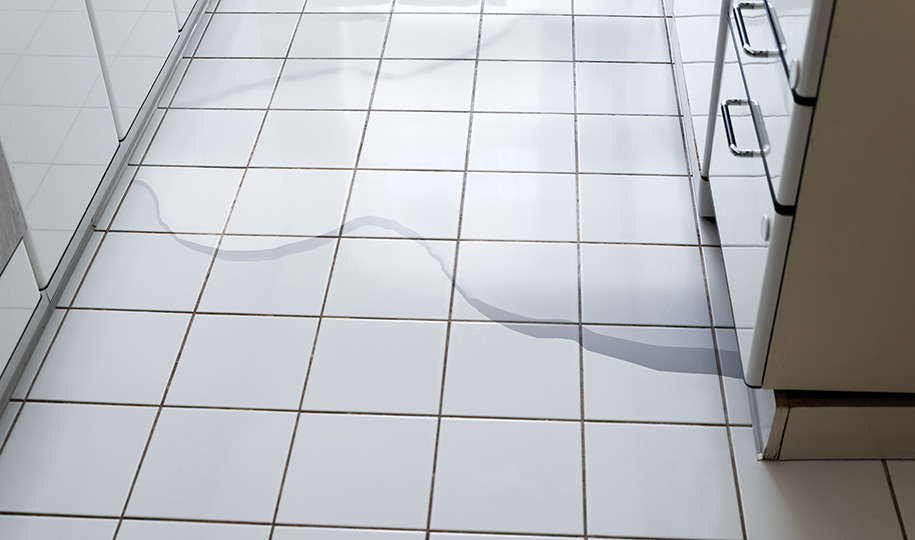
Dishwasher filter cleaning may seem like a mundane, gross task – and honestly, it's not always the prettiest. But keeping your dishes sparkling clean and your dishwasher draining correctly is vital. Imagine hosting a dinner party only to surprise your guests with a rotten smell or running a load of dishes before bed and waking up to a flooded kitchen. This quick, simple task can help prevent disasters like these from occurring.
How Often to Clean Dishwasher Filters
How often you clean your dishwasher filter depends on how much you use your dishwasher! For most households, once per month is adequate. But if you run your dishwasher a lot or often host large gatherings requiring heavy use, cleaning it more often can't hurt. Also, more frequent cleaning can make the job less gross. The longer you wait between filter cleanings, the more likely your dishwasher filter is clogged with gunk and debris. Let's break down just how to do that, and then you can get started.
How to Clean Your Dishwasher Filter
From dishwasher filter location to appropriate cleaning methods, let's walk through the steps to clean your filter and keep your machine running at its best. For more information, watch our handy video on cleaning your dishwasher filter.
1. Locate the Filter
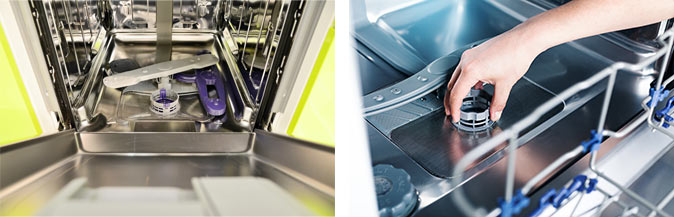
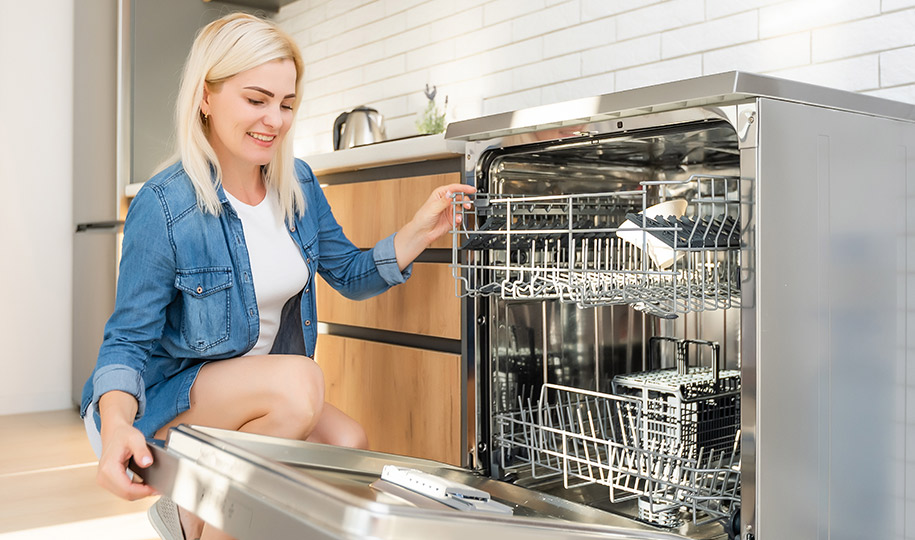
Let's start with your dishwasher filter location. You'll probably find your dishwasher filter on the bottom of the tub – either under the lower spray arm or around the base in a back corner. You'll need to remove the lower dish rack to access it. Once you do, you'll find either a plastic grid or a cylindrical tube that looks a bit like a water pitcher filter.
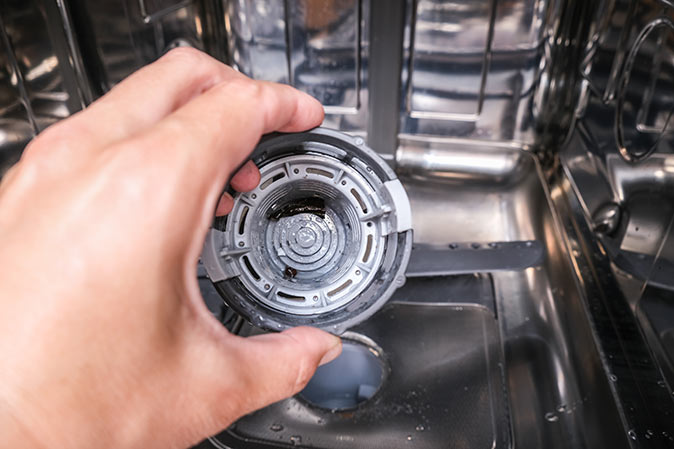
Note: Some newer dishwashers have a second filter below the cylindrical filter. If yours has a second filter, be sure to remove and clean both.
2. Remove Dishwasher Filter
Some filters require tools to remove, but most twist or pull out of the machine. If you run into trouble, use a flashlight to locate directional arrows on the filter cover. They'll tell you which way to unscrew the cap. If your dishwasher has a secondary lower filter, it can be lifted out after removing the first one.
3. Clean the Filter
Once you remove the filter, give it a good cleaning. Start by removing large pieces of food or trash stuck in the filter. Then, mix warm water and dish detergent in a sink, bowl, or bucket. Soak the filter for a few minutes to break down any grease or mineral buildup. After this, grab a small brush or sponge and scrub the filter inside and out to remove any residual debris.
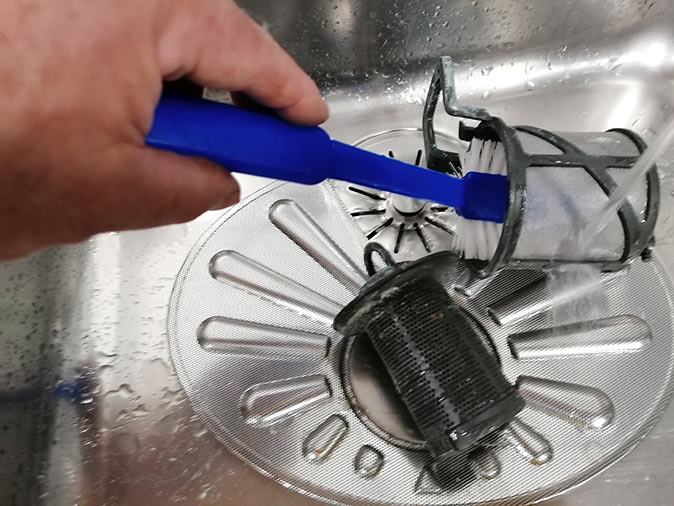
Thoroughly rinse the filter after cleaning until the water runs clear. If necessary, repeat the soaking and scrubbing until the filter is completely clean. Allow it to air-dry completely before replacing it.
4. Clean the Tub
While your filter is drying, look at the bottom of your dishwasher. (Use a flashlight if necessary!) Use a damp cloth to wipe out the basin to make sure you don't put the filter back just to get clogged again.
5. Replace the Filter
Once you've cleaned the filter and tub, replace the filter (or filters) in its compartment. Be sure to secure it tightly so it doesn't come loose and damage any dishes. If the filter doesn't fit back in, it's likely time to replace it.
Read more about when to change your dishwasher filter.
Common Cleaning Mistakes
Now that you know how to clean out your dishwasher filter, we know you're just dying to get started! But before you do, here are a few common mistakes to avoid:
Waiting too long between cleanings. This can leave dirt and grime circulating in your dishwasher and on your dishes. It can also make the job more unpleasant – nobody wants to clean months of buildup from their machine!
Using bleach and vinegar together. Never do this. While each of these separately can be helpful in the cleaning process – killing germs and removing mineral deposits – combining bleach and vinegar is extremely dangerous. Be sure to run your machine between using either substance to avoid mixing them.
Not rinsing your dishes. Loading the dishwasher without first rinsing leads to a much faster buildup of gunk in the filter, requiring more frequent cleaning. Always thoroughly rinse your dishes before starting a cleaning cycle.
More Dishwasher Maintenance
Cleaning your dishwasher filter is just a small part of maintaining your machine. We've put together a few more dishwasher maintenance tips to help keep your appliance in tip-top shape:
- Read the manufacturer's loading instructions: Loading your machine properly is the best way to ensure your dishes get thoroughly cleaned and your machine doesn't experience unnecessary strain.
- Use the recommended detergent for your machine: Each dishwasher works best with a particular type of detergent. Read your manual to learn which will work best with your machine.
- Run cleaning cycles: Between cleanings, run a wash cycle. Empty the dishwasher and pour two cups of distilled white vinegar into a dishwasher-safe bowl on the top rack. Keep the bowl right side up and run a cycle. The vinegar will help break down any debris and deposits between cleanings.
- Protect your dishwasher with home warranty coverage: With dishwasher coverage from First American, you can rest easy knowing your appliance is protected against unexpected breakdowns.
Do you want to learn more about home warranty coverage? Get a free quote from First American Home Warranty today.
FAQs about Cleaning Dishwasher Filters
How long does dishwasher filter cleaning take?
Quickly rinsing off the filter and removing debris can take just a few seconds, but a comprehensive cleaning can take 15-20 minutes.
Can a dishwasher run without the filter?
You should never run your dishwasher without the filter – it can lead to clogs in the drain that can cause issues.
Where is the dishwasher filter?
Most dishwasher filters are on the bottom of the tub, either in the front or back corner. If you're having trouble locating yours, locate your owner's manual for detailed instructions.
The contents of this article are provided for general guidance only. First American Home Warranty does not assume any responsibility for losses or damages as a result of using this information.
Please be aware that if you disassemble a covered system or item, it can invalidate your home warranty or manufacturer's warranty.



Keep Reading




Home Care Buzz Experts
The First American Home Care Buzz team is made up of experienced home warranty writers and editors. Our team provides valuable insights and information to help homeowners like you meet the daily challenges of homeownership.
Continue Reading
This article is about...