
The Ultimate Guide to Creating a Homeowner Maintenance Manual
FEBRUARY 04, 2025 | Home Care Buzz Experts | 5 minute read
Caring for your home is about more than just keeping up with chores. Yet, managing repairs, upgrades, and seasonal tasks can feel overwhelming at times. That’s why creating a well-organized homeowner maintenance manual can be a game changer. It allows you to take control of your home’s upkeep, ultimately saving you time, money, and unnecessary stress. This guide is here to help you craft and utilize a homeowner maintenance manual and log repairs and home updates for your records, making the home care journey a little easier and more manageable.
What is a Homeowner Maintenance Manual?
A homeowner maintenance manual serves as a central repository for all critical information about your home. It provides a reliable way to track repairs, organize warranties and manuals, and document service provider contacts. This manual becomes your go-to resource for managing the intricate details of homeownership, ensuring nothing gets overlooked. This level of detail can save you significant time and effort when you need it most.
Why a Home Maintenance Log is Important
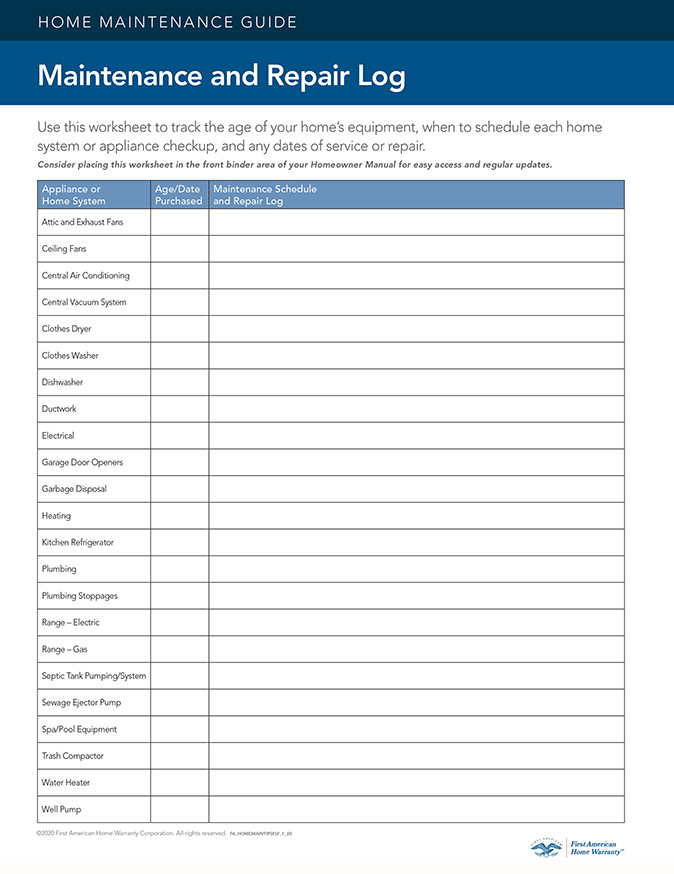
A home maintenance log, such as the comprehensive form provided at the end of this article, works hand in hand with your maintenance manual by providing a record of regular upkeep and repairs. It’s a practical tool that helps prevent minor issues from escalating into costly problems. Keeping a maintenance log also:
- gives you a clear picture of your home’s upkeep history (making future planning easier)
- allows you to track the age and condition of your home’s systems and appliances
- simplifies the process of scheduling regular maintenance tasks
- eliminates the stress of remembering when specific tasks were last performed
Step-by-Step Guide to Creating a Homeowner Maintenance Manual
Creating a homeowner maintenance manual may seem daunting, but breaking it down into manageable steps makes the process straightforward.
1. Gather Essential Documents
Start by gathering all the essential documents related to your home. This should include:
- home system and appliance instructions and maintenance records
- receipts for repairs and improvements
- contact information for trusted service providers
- maps and resources like the location of shutoff valves for the main water and gas shutoff valves, as well as the electrical panel
- neighborhood information like property outlines and HOA guidelines, fees, and contact information, if applicable
- your home warranty contract, if you have one
2. Organize Records Effectively
Decide how you want to organize your records:
Digital
If you are considering going the digital route, start scanning your documents and organizing them in folders on your computer or using document storage software. When you keep a digital manual, it offers the added advantage of easy sharing and secure backups for added security.
Physical
If you prefer a physical format, use a sturdy binder with dividers and pockets to keep your home maintenance guide easily accessible.

3. Include Maintenance Logs
In addition to organizing your docs, create a spot for your home maintenance guide or manual. A well-maintained manual will help you keep up with essential maintenance and allow for quick reference when you need it most.
Related: Preventive home maintenance offers cost savings and safety improvements that help extend the life of your home.
Pro Tips for Maintaining Your Manual
Like your home, keeping your homeowner maintenance manual up to date requires regular effort. Add new receipts, warranties, and service details as soon as they become available. If you prefer hardcopy manual tracking, consider backing up your records digitally to protect them against loss or damage.
Take advantage of technology to simplify the process. Apps like HomeZada and Centriq can help you manage maintenance schedules, store important documents, and set reminders for upcoming tasks. These tools make it easier to stay on top of your home’s needs while reducing the time spent managing records.
Additionally, as each season comes with unique challenges and opportunities for upkeep, it can be tough to remember all the tasks for every season and when to tackle them. Consider organizing your manual based on the seasons and keeping a seasonal home repair checklist to help you plan each season’s chores. Stay on top of these tasks all year long with the convenience and ease of these checklists in your manual.

DIY Maintenance Tracking
Documenting home improvements and repairs is an essential part of maintaining your property. Whenever you complete a renovation or repair, take the time to log specific details. For example:
- record paint colors and formulas
- note flooring materials and installation dates
- keep a record of contractor information and costs
- maintain a detailed log that includes plumbing and electrical fixes, roof inspections, and appliance servicing
This information not only helps you stay organized but also demonstrates the care and attention you’ve given your home. Should you decide to sell your property, these records can increase its appeal to potential buyers.
Your Home Maintenance Manual is also a Selling Tool
When it comes time to sell your home, your homeowner maintenance manual is more than just a tool for personal organization. It also is a valuable reference that demonstrates how well you’ve cared for your home. Providing this kind of comprehensive record can inspire more confidence for the buyer who wants to purchase your home. Detailed records provide prospective buyers with a clear history of your home’s care, inspiring confidence in their purchase decision.
Further reading: By following our top tips for home maintenance, you can keep your home in top condition and enjoy peace of mind at sale time.
Wrapping Up Your Homeowner Maintenance Manual Strategy
Creating and maintaining a homeowner maintenance manual is a game-changer for managing your property efficiently. Pairing your comprehensive manual with a First American Home Warranty adds an extra layer of protection. The manual keeps you proactive and organized, a home warranty gives you coverage for unexpected repairs and system breakdowns.
While not all repairs to covered appliances and systems are included, the benefits of using your coverage can provide financial relief, peace of mind, and confidence in managing your home. Start today by getting a free personalized quote from First American Home Warranty.
FAQ About Creating Home Maintenance Manuals
What is the best way to create a digital homeowner maintenance manual?
Using cloud-based platforms or specialized apps allows you to store and organize scanned documents and logs easily. These options ensure your records are secure and accessible.
How often should I update my maintenance log?
It’s a good practice to update your log every time you complete a repair, service, or upgrade. Monthly updates are ideal for staying on top of regular tasks.
Can a home warranty replace the need for a maintenance manual?
While a home warranty provides coverage for unexpected repairs, it cannot replace the need for proactive care and organization provided by a maintenance manual.
What tools can I use to simplify home maintenance and tracking?
Apps like HomeZada and Centriq, and spreadsheet software templates are excellent for tracking maintenance schedules, storing documents, and setting reminders. These apps are also designed to help homeowners like you manage maintenance, warranties, and upgrades with ease.
Example Home Maintenance Log
The contents of this article are provided for general guidance only. First American Home Warranty does not assume any responsibility for losses or damages as a result of using this information.
Please be aware that if you disassemble a covered system or item, it can invalidate your home warranty or manufacturer's warranty.


Keep Reading




Home Care Buzz Experts
The First American Home Care Buzz team is made up of experienced home warranty writers and editors. Our team provides valuable insights and information to help homeowners like you meet the daily challenges of homeownership.
This article is about...