
The Complete Guide to Rain Chains for Your Home
MAY 16, 2024 | Home Care Buzz Experts | 9 minute read
What is a rain chain? Simply put, it’s an aesthetic alternative to a downspout for your gutters. But artistically, rain chains hold a mystical appeal and offer a way to bring glam to your gutters.
So, let’s learn more about how you can beautify your home with these delightful ornamental downspouts.
What Is a Rain Chain?
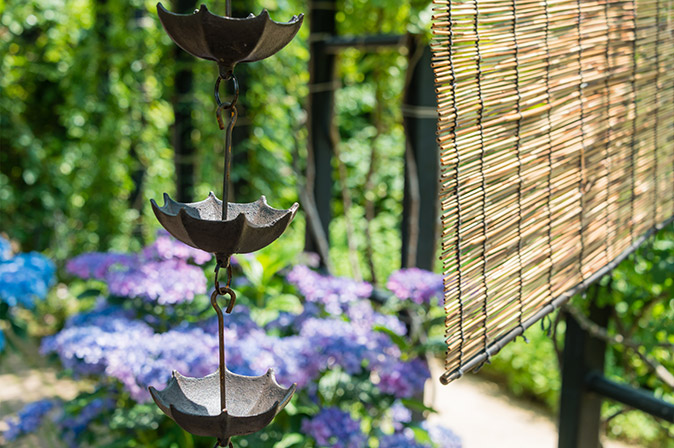
Rain chains originated in Japan, where they’ve been used for hundreds of years and are called “kusari doi” or “chain gutter.” Traditionally, they were associated with Japanese tea ceremonies and adorned tea houses. They provided a sensory experience as rainwater gently trickled down the links to collecting basins on the ground.
Today, homeowners, landscapers, gardeners, and designers have fallen in love with rain chains, and it’s easy to see why. They’re an elegant alternative to conventional gutter downspouts—and you can even add them to homes that don’t have downspouts.
Rain Chain Styles
Rain chain downspouts come in two primary styles: cups and links.
Cup Style
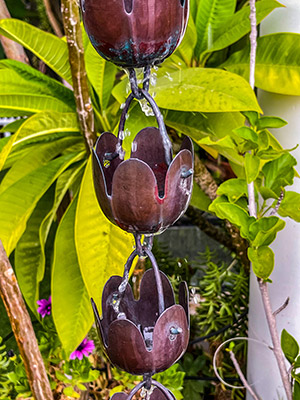 Cup rain chains feature a series of delicate cups linked together. Most have a small hole in the bottom of each cup that allows rainwater to drain from one cup to the next. Others are made so rain collects in the top cup and then spills over into the next cup as it travels down the chain. You can choose from many sizes, shapes, and motifs—flowers and foliage, modern shapes, stars, bells, and more.
Link Style
Link rain chains use more traditional chain links. Some designs incorporate hummingbirds, umbrellas, hearts, and other motifs. Chains are available in a variety of sizes and metals.
 Quick tip: Of the two styles, cups are more suitable for areas with excessive rainfall (choose a larger cup size if you receive lots of rain). Linked rain chains are ideal in drier regions with infrequent rain, as the links can be quickly overpowered during a heavy downpour.
Common Rain Chain Materials
When it comes to rain chain materials, remember that these beauties spend their lives outside in the elements, constantly exposed to wind, rain, and sunlight. That’s why choosing a material suitable for your climate and amount of rainfall is essential.
Popular materials include:
Copper: Copper rain chains are popular due to their deep, rich color and resistance to rust. Available in a smooth or hammered (textured) finish, copper rain chains oxidize to develop an elegant verdigris (green) patina over time.
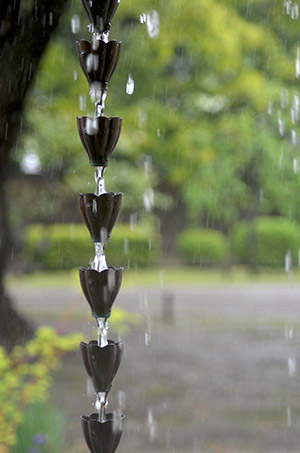 Brass and bronze: Rain chains made from brass and bronze are very durable. Because these materials are copper-based, they’ll develop a beautiful patina similar to that of a copper rain chain.
Stainless steel: Choose stainless steel if you want a rain chain that performs well in windy areas with heavy rainfall. Stainless steel blends nicely with contemporary homes and, despite its industrial reputation, can look elegant and stylish.
Aluminum: Because aluminum is so lightweight, aluminum rain chains work wonderfully in more protected areas that experience little wind. Generally silver in color, an aluminum rain chain can develop a light patina over time.
Glass: As you might guess, a glass rain chain is highly delicate and best for drier, protected spaces. The upside is stunning when sunlight hits it at just the right angles. Choose from glass beads, larger glass “rock” designs, and other shapes and motifs in colors that accentuate your home.
Plastic: Though common, plastic is generally considered a cheap rain chain material. It can be easily broken or damaged in the wind, performs poorly during heavy rainfall, and doesn’t produce the gentle tinkling sound of metal rain chains. It can also grow mold when exposed to water and outside elements.
The Pros and Cons of Rain Chains for Gutters
Is adding a rain chain on your house the right choice for your property? Knowing the pros and cons of swapping your gutter downspout for a rain chain can help. Here are the notable pros and cons.
Pro: Beautiful and Unique
While traditional gutters efficiently move water away from your home, rain chains do so with style, allowing you to add a personalized design element to your property.
Pro: Less Likely to Clog
If you’ve lived in a home with traditional gutters for any time, you know that annual gutter maintenance is a must. Luckily, rain chains are much less likely to get clogged since leaves, sticks, and other debris rarely get stuck.
Pro: Relatively Inexpensive
Adding decorative pieces to your yard or garden can be expensive, but you won’t have to break the bank to add a rain chain downspout to your home. You can find many different rain chains at major home improvement retailers or garden centers starting at $50 or less.
Con: Limited Water Capacity
While rain chains work well in areas with average or sparse rainfall, they may get overwhelmed during heavy storms. Opting for cup rain chains instead of links is a good idea for areas with a lot of rain, but even cups may need help managing water during a deluge.
Con: High Winds Lower Efficiency
Rain chains rely on gravity and surface tension to direct water down the chain. However, high winds can blow water off the chain, causing it to land along your foundation. If you happen to live in an area with a high incidence of fierce rainstorms, rain chains for gutters might not be the best option.
Pro tip: If rain chains don’t work for you, check out these new gutter styles.
Con: Freezing
Rain can quickly turn to ice during the colder months, especially overnight. Frozen rain chains can’t channel rainwater away from your home. Additionally, the added weight of ice could cause the chain to break or damage your gutter.
Installing a Rain Chain to Your Gutter
If you have existing gutters and downspouts, replacing them with a rain chain downspout is easy, and you have several options for how to do so.
Use a V-Hook
After removing your downspout, put the top link of your rain chain up through the hole in your gutter where your downspout used to be. Loop the V-hook through the top link, then gently drop it down to secure it inside the hole. The V-hook should be large and durable enough to hold the rain chain securely in the opening.
The V-hook method works best in areas with lighter rainfall.
Installation Kit
Consider a rain chain installation kit for more moderate to heavy rain and a more secure installation. Kits come in many sizes and metals (copper, aluminum, and more) and typically include a short tube with a flange and a U-bracket. For best results, choose a kit with a tube diameter that fits the hole in your gutter. Some kits also provide a wider flange plate that you can use to cover a larger hole.
To use a kit, simply spread a thin layer of all-weather caulk on the flange, all around the tube, and secure it in the hole. Once dry, attach your rain chain to the tube using the U-bracket provided.
Rain Chain Gutter Adapter
If your gutter downspout hole is too close to your home’s exterior, you can purchase a rain chain gutter adapter, which fits into your gutter hole. This handy device has a slight jog (offset by a few inches, depending on the adapter), enabling your rain chain to hang that many inches away from your home. Most rain chain gutter adapters come with a U-bracket for attaching your rain chain, so you don’t need a separate installation kit when using one.
Rain Chains With No Gutters
If your home doesn’t have downspouts, you still have options. One is to install a short gutter section, adding a hole at the end where you want your rain chain to hang. Another is to add a 90-degree corner leader head, which fits snugly into the area where two roofs intersect, like a corner of the house. Many are quite decorative and generally come with everything you need for easy installation, including a small tube at the bottom to attach your rain chain using a U-bracket.
How to Make A DIY Rain Chain
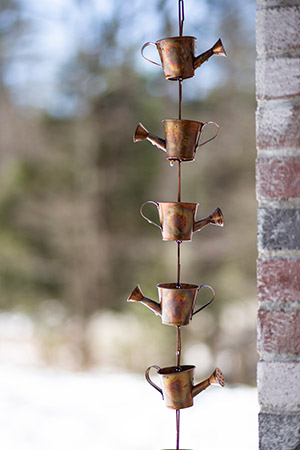 The beauty of a DIY rain chain is that you can choose your style (cup or link), material, and design—and the sky’s the limit regarding rain chain drainage ideas. A popular DIY rain chain idea is attaching tiny terra cotta pots to links to form a whimsical rain chain perfect for a garden-themed décor. You can leave the pots as they are, paint each pot differently, or choose one color that complements your home’s exterior. Small steel buckets linked together are another common DIY rain chain idea.
Select your material and style based on the amount of rainfall your area receives and where you hang your rain chain. If you want it to be a focal point of your home’s exterior décor, plan on spending more time and money on the finished design.
Link-style rain chains are the easiest to assemble, while a cup-style rain chain requires more effort.
Here’s an easy technique for building a DIY rain chain:
Step 1: Measure how long you want your finished rain chain to be, then cut the chain in your selected material to that length.
Step 2: Decide how much space you want between each cup (6 to 12 inches is standard, but could be more depending on the depth of your cups). Then, cut your chain into lengths equal to that measurement. For example, if you want each cup to be eight inches apart, cut your chain into 8-inch pieces.
Step 3: Hook a small S-hook through one end of a chain piece and into the drainage hole of a cup. Then, connect the second piece of chain to the other side of the S-hook. Continue fastening chain pieces to your cups using the S-hooks.
Step 4: After you’ve attached all the cups to your chain pieces, you’re ready to hang your rain chain.
Collecting Your Rain Chain Water
Directing the water from your rain chain into a water barrel, a decorative basin, or a splash guard is important. If you don’t, it can seep into your home’s foundation and lead to dry rot, cracking, and possible structural damage.
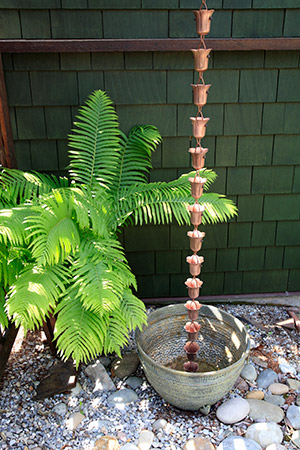 Select a material and design that matches your rain chain for a cohesive, visually appealing look. Or go with an entirely different vibe for something more eclectic.
You can use the water you collect in various ways. Common rain chain drainage ideas include watering your garden, washing a vehicle, and cleaning outdoor surfaces. Some rain barrels even come with a faucet and hose attachment, making it easy to access and use your harvested water.
Attach a small hook or ring to the bottom of the barrel/basin’s interior using strong all-weather adhesive to secure your rain chain to a water barrel or basin. Then, connect it to the end of your rain chain. Some basins conveniently come with a ring already attached. You can do the same to anchor your rain chain to a splash guard. Or, for a decorative touch, try propping a heavy ornamental rock or watering can (filled with stones for added weight) over the end of the rain chain to secure it to the splash guard.
Is a Rain Chain Right for You?
Rain chain gutters are delightful, unique components of a comprehensive gutter system—and a charming way to safeguard your home from water damage. They can add beauty to your outdoor motif and create pleasing sounds when the rain arrives. Best of all, if you are extra crafty, you can create a DIY rain chain to add a more personal touch to your property.
However, there might be better ideas than rain chains for everyone. They are not as efficient as gutters and can’t handle heavy rains. Sticking with gutters to protect your foundation might be best if you live in a rainy area.
Another way to protect your home is with a home warranty. Plans from First American cover many of the major home appliances and systems you use daily. Read more about our home warranty coverage and its convenience and budget protection. You can also get a personalized home warranty quote.
Rain Chain FAQs
Can you install a rain chain without a gutter?
Yes, you can install rain chains on your house even without gutters. To learn how scroll up to this blog's “Rain Chains Without Gutters” section.
Do rain chains work in heavy rain?
Cup chains are better at handling higher amounts of rain than link chains, but overall, rain chains do not work well in areas with heavy rain. When a big storm comes through, the rain can overwhelm the rain chain and lead to rain pooling near the home’s foundation, causing foundation damage over time.
How can I use the water I collect from my rain chain?
If you decide to install a rain chain on your house, you’ll also need to add some water collection devices. A basin, pot, or barrel can be good options for holding the water that travels down the chain. Don’t just toss this water when the storm is over. You can put that water to good use in many ways, especially if you live in a drought-prone area where water conservation is important.
Some of our favorite rain chain drainage ideas include:
- Give your pet a bath
- Wash your car
- Water your garden
- Clean your patio furniture
- Refill your outdoor fountain
- Add to your compost bin
- Wash your driveway
Can a rain chain just be decorative?
Of course! If you want to add a rain chain to your home but live in a rainy climate or prefer to keep your gutters, nothing stops you from adding decorative rain chains. No matter what, a rain chain adds style and character to your home. They also sound beautiful in the rain, adding a meditative peace to a rainy day.
The contents of this article are provided for general guidance only. First American Home Warranty does not assume any responsibility for losses or damages as a result of using this information.



Keep Reading





Home Care Buzz Experts
The First American Home Care Buzz team is made up of experienced home warranty writers and editors. Our team provides valuable insights and information to help homeowners like you meet the daily challenges of homeownership.
This article is about...