
Swimming Pool Maintenance: A Complete Guide to Pool Care
MAY 19, 2025 | Home Care Buzz Experts | 6 minute read
Project Overview

Intermediate

4 Hours

> $300
All Values are Estimates
Keeping your swimming pool clean and well-maintained makes swimming safer and more enjoyable all season long. Regular pool maintenance can prevent algae growth, equipment issues, and expensive repairs.
Whether you have a chlorine or saltwater pool, adding pool upkeep to your home maintenance checklist keeps your water clear, balanced, and safe to use.
Chlorine vs. Saltwater Pool Maintenance
Both chlorine and saltwater pools need regular maintenance, but there are key differences between the two:
Chlorine Pools
Chlorine-based pools rely on pre-made chlorine in either liquid, powder, or tablet form. They need chlorine added regularly and manually, along with frequent testing and use of a stabilizer. Chlorine keeps water sanitized, but levels need constant monitoring.
Saltwater Pools
Saltwater pools electrically process salt into usable chlorine using a saltwater generator. They require fewer chemicals than chlorine pools, but the salt cell must be cleaned regularly to prevent buildup, and salt levels should stay within the recommended range.
How to Take Care of a Pool: 13 Tips
Whether you have a chlorine or saltwater pool, taking care of it means cleaning it regularly, balancing it with chemicals, and servicing the equipment when necessary. Follow these essential pool maintenance tips to keep your pool in top shape.
1. Clean and Reassemble Equipment
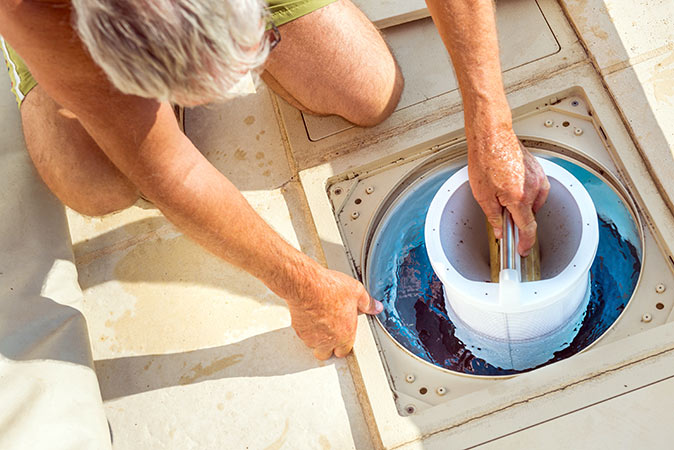
Before opening your pool for the season, be sure to check, clean, and reassemble all the pool equipment. This includes the pool skimmer, pump basket, and filter system. If you own a chlorine pool with a cartridge filter, clean the filter and consider replacing it if it’s old or dirty. Sand and DE (diatomaceous earth) filters can be backwashed to remove debris.
If you own a saltwater pool, you’ll want to clean the saltwater cell in your generator. Be sure to shut off your generator completely before doing this to avoid the risk of shock. Good saltwater pool maintenance also involves checking for any mineral deposits (white chalky substances) on your salt cell and scrubbing them away. If your generator is self-cleaning, you may be able to get away with a quick rinse to remove any deposits.
2. Remove Debris Regularly
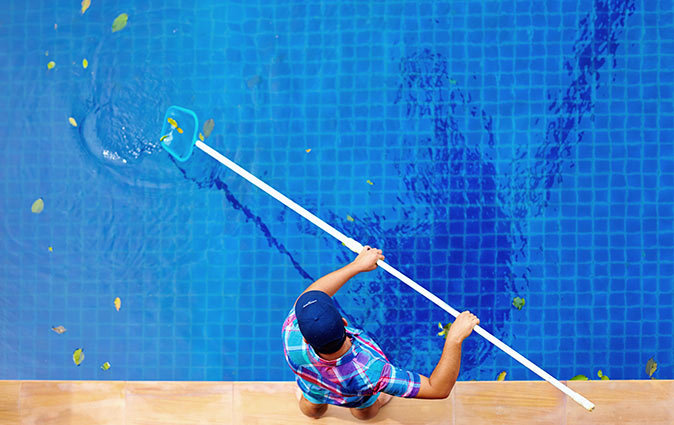
Leaves, bugs, and dirt pile up fast. Use a pool skimmer to remove floating debris and vacuum the pool floor regularly to get rid of settled dirt. Scrubbing the walls and tiles also stops algae and calcium from building up, and keeps the pool surfaces clean and smooth.
3. Check and Maintain Water Levels
Pools lose water because of evaporation, splashing, and backwashing. For good circulation, keep the water level at the midpoint of the skimmer opening. If the level drops too low, the pump may run dry and overheat, which can damage it.
4. Test and Balance Pool Chemicals
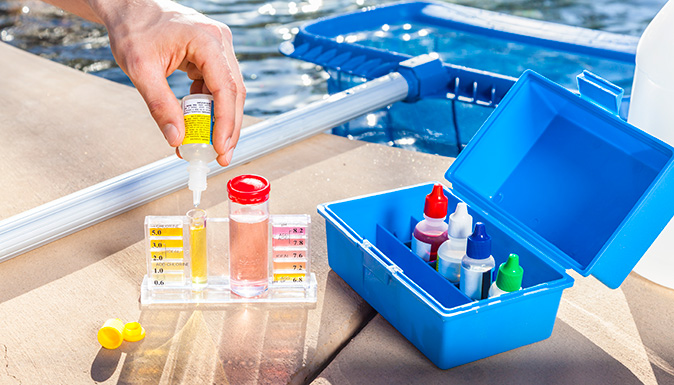
A pool test kit helps keep water chemistry in check, but chlorine and saltwater pools have slightly different testing needs:
- Chlorine pools: Test for pH, chlorine levels, alkalinity, and calcium hardness.
- Saltwater pools: Test for the same factors as chlorine pools, but also check salt levels and inspect the salt cell for buildup.
Ideal levels include:
- pH: 7.2 to 7.6. This prevents irritation and equipment damage.
- Chlorine: 1 to 3 ppm (parts per million). Chlorine kills bacteria and algae.
- Alkalinity: 80 to 120 ppm. This stabilizes the pH levels.
- Calcium hardness: 150 to 250 ppm. This prevents damage to the plaster and tile.
5. Shock the Pool as Needed
Shocking your pool increases the chlorine amount beyond normal, oxidizing any bacteria, algae, and other organic contaminants. Many pool owners shock the pool at the start of the swimming season and several times throughout the summer. The best time to shock a pool is after the sun goes down, since UV rays can break down and reduce chlorine levels.
Start by filling a 5-gallon bucket with water and adding your oxidizer (typically liquid, granular, or tablet chlorine, or a combination of these) according to the manufacturer’s instructions. Pour the shock mixture into your pool and let the pump run for at least six hours.
If you have a saltwater pool, you might have a “shock” or “superchlorination” button on your generator that you can use to shock your pool. However, this often puts a heavy load on the salt cell and could shorten its lifespan, so shocking “by hand” might be a better option. Follow the manufacturer’s shock instructions before taking action.
6. Clean the Salt Cell (of a Saltwater Pool)
Saltwater pools rely on a salt chlorine generator to turn salt into chlorine. To keep the system working well, clean the salt cell regularly to stop scale buildup. Check and adjust salt levels based on manufacturer recommendations — these are usually between 2,500 and 3,500 ppm.
7. Run the Pool Pump Daily
Good water circulation stops algae growth and spreads chemicals evenly. Run the pool pump for at least 8 to 12 hours daily, depending on the size of the pool and how often you use it. A variable-speed pump can improve energy efficiency while keeping water flowing, and as one of the quietest pumps available, it produces less noise pollution in your backyard.
8. Clean the Pool Filter
A clogged filter can make your pool water murky and reduce the efficiency of the pool pump system. Backwash sand and DE filters when pressure increases by 8 to 10 psi (pounds per square inch) over the baseline. Clean or replace the cartridge filters every few weeks for better filtration.
9. Monitor and Adjust Stabilizer Levels
Cyanuric acid, also called a stabilizer, protects chlorine from breaking down in sunlight. Keep levels between 30 and 50 ppm to help chlorine last longer and cut down on the frequency that you adjust the chemicals.
10. Inspect and Maintain Pool Equipment
Check the pump, heater, and other pool equipment for leaks, strange noises, or malfunctions. Fix minor issues early to avoid expensive repairs and extend the life of your pool’s components.
11. Winterize Your Pool
Before closing your pool for the colder months, winterize the pool by lowering the water level, adding winterizing chemicals, and covering the pool to keep debris out. Drain the pool water from the pump, filter, and heater to prevent damage from water potentially freezing.
12. Schedule Regular Professional Inspections
A professional inspection can catch hidden issues before they become big problems. Pool experts check for leaks, faulty equipment, and water quality issues so that everything runs smoothly year-round. It’s a good idea to schedule a professional inspection annually to make sure you haven’t overlooked anything in your routine maintenance over the past year.
13. Use Your Pool Home Warranty Coverage
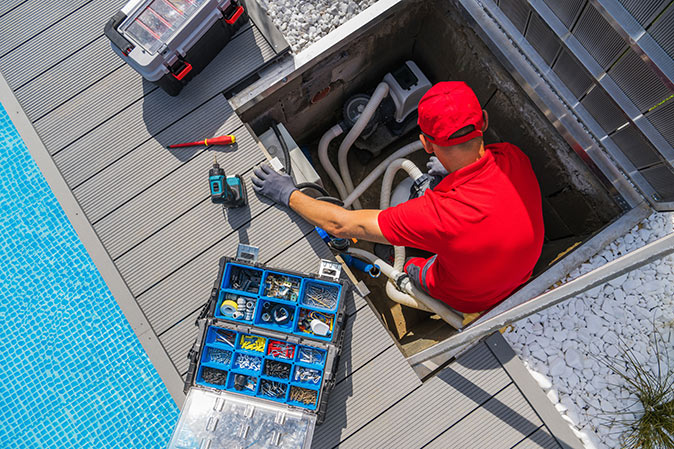
Keeping a pool in good shape means taking care of parts like pumps, filters, heaters, and plumbing. Regular use, weather, and general wear and tear can cause pool equipment to break down over time. If something malfunctions, repairs can be expensive. That’s where the benefits of pool warranty coverage come into play.
First American Home Warranty offers optional coverage for swimming pools, spas, and their components, like filters, valves, pumps, and saltwater cells. This valuable pool and spa coverage option can help lessen the shock of unexpected repair costs.
Create a Pool Maintenance Checklist
Creating a maintenance routine for your pool — and sticking to it — helps prevent pool problems and extends its life. Some tasks should be done daily, while others need attention weekly, monthly, or seasonally. Sticking to a schedule keeps your pool clean and can help it last longer.
- Daily: Skim debris and check the chlorine levels.
- Weekly: Test and balance chemicals, vacuum the pool floor, and scrub walls.
- Monthly: Deep clean the filters and check for algae growth.
- Seasonally: Open and close the pool depending on the season.
Get Help With Pool Repairs Through a Home Warranty
Although regular maintenance is the best way to ensure that your pool stays in great shape, breakdowns can still happen that require professional expertise. A home warranty with pool coverage can help protect your budget from costly repairs, so you can spend more time enjoying your pool and less time worrying about it. Get a free home warranty quote today!
The contents of this article are provided for general guidance only. First American Home Warranty does not assume any responsibility for losses or damages as a result of using this information.
Please be aware that if you disassemble a covered system or item, it can invalidate your home warranty or manufacturer's warranty.







Home Care Buzz Experts
The First American Home Care Buzz team is made up of experienced home warranty writers and editors. Our team provides valuable insights and information to help homeowners like you meet the daily challenges of homeownership.
This article is about...