
The Complete Guide to Water Softener Maintenance
MARCH 19, 2024 | Home Care Buzz Experts | 6 minute read
Wherever you use water in your home, you can see the benefits of water softeners. This appliance can be integral to your daily routine, contributing to more refreshing showers and baths and preserving more vibrant colors in your clothes after laundering. But they can't adequately serve your household without regular water softener maintenance – which is crucial to performance.
Luckily, maintenance for water softeners is relatively simple and can be performed by you with minimal effort. While you may be alerted to any immediate maintenance tasks on the display of your softener, you should know about water softener maintenance, DIY upkeep, and cleaning that helps you keep this machine working normally.
What maintenance does a water softener need, and how often should it be performed? These are the questions we'll answer in this comprehensive water softener system maintenance guide so that you can keep the water in your home free from hard minerals.
How Do Water Softeners Work?
But first, what is a water softener, and what does it do? A water softener is a filtration system that removes hardness-causing calcium, magnesium, and other minerals from your water in an ion exchange process. Resin beads inside the softener trap the calcium and magnesium and exchange them for sodium or potassium, a solution that eventually becomes waste.
Higher levels of those minerals – hard water – can cause trouble in a home, such as:
- causing scale build-up in your pipes, causing clogs, and decreasing water pressure
- decreasing the life span of appliances like dishwashers, coffee makers, and ice machines
- damaging hot-water appliances, since the higher the temperature of the water, the more calcium and magnesium can harden into solid deposits inside your hot water heater
To determine if you need a home water softener, you can measure the hardness of your water with a test kit or from a professional. You can buy DIY kits online, call a plumbing company, or your community water system may have the information or may test it for you.
How to Maintain a Water Softener
1. Check Salt Levels
How often: Once a month
The last item on this water softener maintenance list is more crucial to the machine's function than other tasks. You should check the salt levels in the brine tank once a month to ensure your water softener can remove hard minerals. Salt typically needs to be replenished every two to four months, but checking the levels monthly is recommended to help plan and prevent low salt levels. This is also a good time to ensure you're using the correct type of salt recommended for your specific water softener — granular, tablet, or block — and use the appropriate salt.
2. Clean the Brine Tank
How often: Every five to 10 years for modern models, annually for older models
Modern ion exchange water softeners use salt to soften water, but salt can build up in the brine tank over the years and affect performance. If your water suddenly turns hard and your water softener seems to be operating normally, it could be time to clean the tank to improve its functionality. While this water softener maintenance step can be performed infrequently, scheduled cleanings are essential.
To clean your water softener's tank, begin by shutting off the water supply to the machine and emptying any water or salt left inside. If your softener has a mesh brine filter at the bottom, remove that, too. Next, follow these steps:
- Mix a couple of gallons of water with dish soap, pour it into the tank, then scrub the interior with a brush.
- Dump the soapy water and rinse the tank with water.
- Pour a mixture of two or three gallons of water and a quarter cup of bleach into the tank and let it set for half an hour to eliminate any bacteria in the tank.
- Dump and rinse the bleach mixture, reassemble the tank, and replenish the salt and water.
3. Break Up Salt Bridges
How often: As necessary
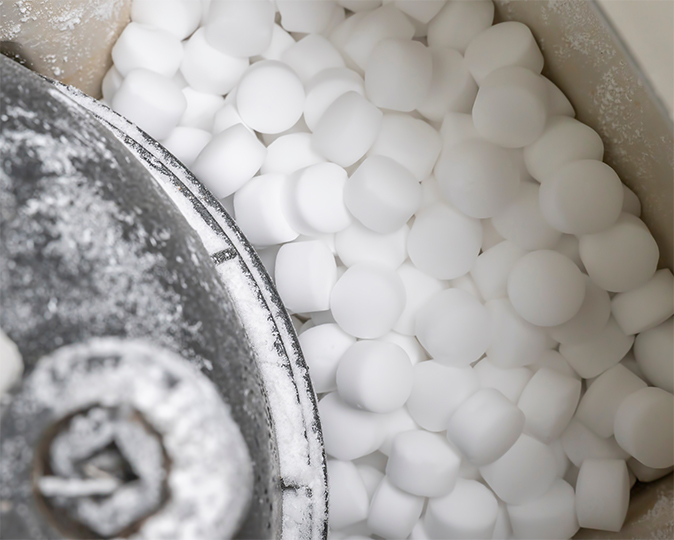
Removing salt bridges is the most common maintenance for water softeners you're likely to perform. When you use the wrong type of salt, too much salt, or the humidity around your softener increases, the salt in the tank fuses and hardens, creating a thick layer that sits above the water in the tank. When this happens, you'll need to break up this "salt bridge" with a broom handle or another blunt instrument so that the salt and water can mix again.
Tip: If gentle poking with a broom handle doesn't break up the salt bridge, try pouring hot water over it first.
4. Clear Salt Mushes
How often: As necessary
Salt mushing takes a bit more water softener system maintenance than salt bridges. When salt dissolves and then reforms as slush at the bottom of your tank, the water flows around the mush instead of mixing, preventing the water softener from operating normally. If poking it with a broom handle doesn't clear the salt mush, you need to fully remove the salt from the tank, clean the tank, and add new salt. Eliminating salt bridges and mushes early on can help prevent damage to your water softener in the future.
Tip: If you'd like to conserve salt, you can dissolve salt mushes in a bucket of hot water and then return the mixture to the tank.
5. Clean Resin Beads
How often: Every three to four months
Though salt is essential to the operation of a water softener, it is the resin beads that remove hard minerals from your water. Luckily, cleaning and recharging resin beads is probably the easiest maintenance for water softeners that you can perform. Every few months, buy a bottle of liquid water softener cleaner at your local hardware store, pour the recommended amount into the tank, and start a regeneration cycle (or wait until one starts automatically). This will restore the efficiency of the beads.
6. Clean the Venturi Valve
How often: Every six months
The Venturi valve brings water from the brine tank into the resin tank, and if this valve becomes clogged, your water softener will not function. Venturi valves are typically located on the head of the water softener but consult your user manual if you're having trouble locating it. It should be enclosed in a fairly easy case to remove, and then you can remove the various parts of the valve, like the nozzle and screen. Be sure to thoroughly wash and gently scrub each component of the Venturi valve to ensure that water can flow freely between the brine and resin tanks.
7. Check the Bypass, Intake, and Outtake Valves
How often: Once a month
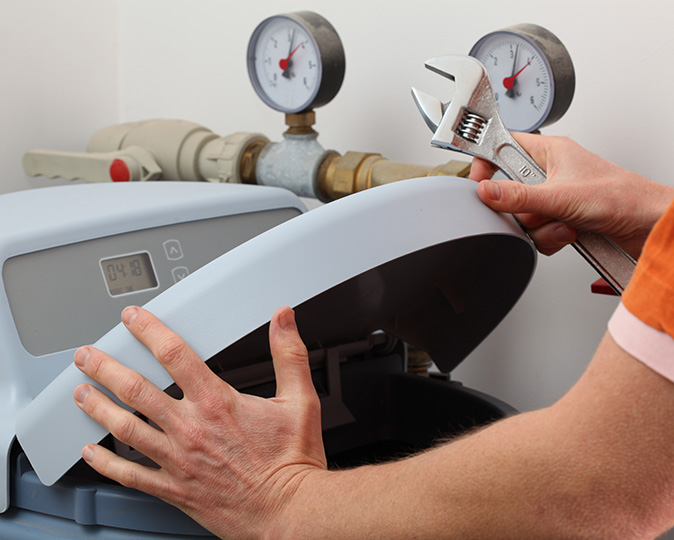
The bypass valve allows your main water supply to bypass your water softener and continue to the rest of the plumbing in your home in case of damage. The intake valve brings water into the device, and the outtake valve controls the flow back to the main water supply and the rest of your home. While maintaining these valves isn't the most crucial piece of water softener system maintenance, it can help prevent leaks that can affect the machine's performance — or cause water damage, if severe enough.
To maintain these valves, simply open and close them once a month to make sure they're not rusted or loose. Start by closing the bypass valve, then the intake and outtake valves. If everything looks OK, open them in reverse order.
Professional Water Softener Maintenance Service
While you can perform the aforementioned water softener maintenance, DIY isn't for everyone — and that's ok! These are typically included as part of an annual maintenance contract, and this water softener maintenance cost ranges from $100 to $250 per year.
Home warranty plans may cover water softeners as an optional add-on to plumbing warranty coverage. While regular water softener system maintenance can extend the life of this device, it can't help it live forever. When breakdowns eventually occur, ensure your savings are protected against repairs and replacements with a First American home warranty plan.
The contents of this article are provided for general guidance only. First American Home Warranty does not assume any responsibility for losses or damages as a result of using this information.
Please be aware that if you disassemble a covered system or item, it can invalidate your home warranty or manufacturer's warranty.



Keep Reading






Home Care Buzz Experts
The First American Home Care Buzz team is made up of experienced home warranty writers and editors. Our team provides valuable insights and information to help homeowners like you meet the daily challenges of homeownership.
This article is about...