
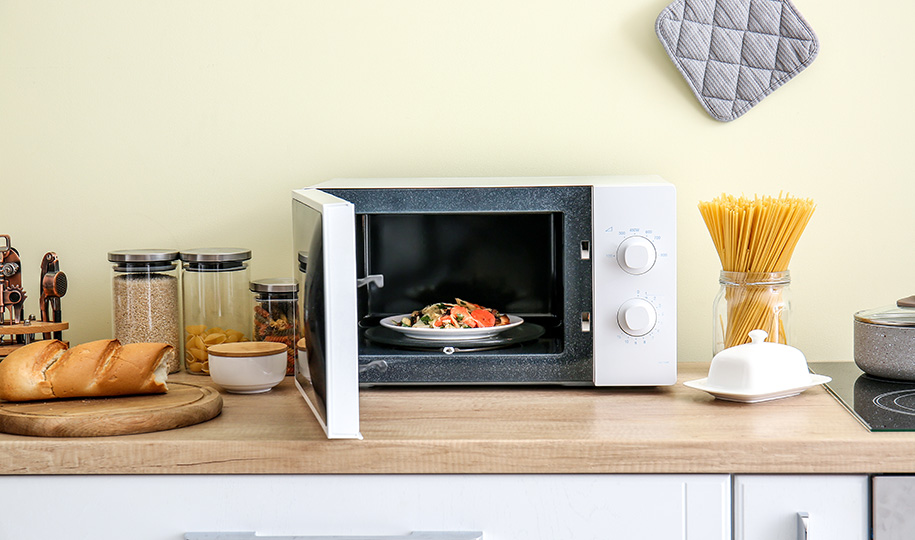
Your microwave can be one of the most important appliances to help you survive a busy week. It brings life to leftovers, defrosts frozen entrees, cooks ready-made meals, and makes popcorn in a jiffy. These are all reasons so many people consider their microwave an essential home appliance.
But what can’t you put in the microwave? A surprising number of things. You may already know a metal spoon or fork can wreak havoc on your microwave’s electronics, but there are plenty of other materials, objects, and even foods that can damage it, make a mess, or release an unpleasant chemical. So, before you throw in an entire container of leftovers or try to heat your travel mug of cold coffee, look at this list of what not to put in a microwave.
1. Metal Utensils
Why it’s bad:
Metal utensils are one of the most notorious destroyers of microwaves because they have trouble absorbing the waves emitted when you turn on your appliance. Instead of absorbing all the heat being produced, metal utensils deflect that energy back onto the circuitry of your microwave.
Metal utensils—whether they’re made of stainless steel, copper, aluminum, gold, or other metals —are not microwave-safe unless they are specially treated and/or the manufacturer indicates that they are safe to use.
What happens:
The deflected energy heats up the electrical components of your microwave, causing sparks and possibly a fire (both of which can cause bodily harm). Even if you don’t see sparks flying, it’s likely that the working parts of your microwave overheat and stop working.
2. Aluminum Foil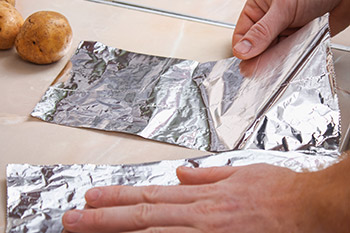
Why it’s bad:
While we mentioned in the list of metals above that aluminum falls into the category of what not to put in a microwave, this warning bears repeating when it comes to aluminum foil.
The thinner a sheet of metal is, the more damage it can cause to a microwave. Because metal struggles to absorb the energy put out by your microwave, thin sheets of aluminum foil lack the density to absorb much at all, meaning more energy is deflected back at the metal components of your appliance.
What happens:
The likelihood that your microwave will begin sparking or catch on fire is increased more than it would be with a denser piece of metal, like a cookie sheet (although metal cookware is also not recommended for microwave use).
Note: If food packaging is marked microwave safe, simply follow the instructions given by the manufacturer and your microwave should be safe. It may also be safe to use small pieces of foil to prevent parts of your food from overcooking, as long as you follow the correct safety protocols.
3. Metal Travel Mugs and Insulated Bottles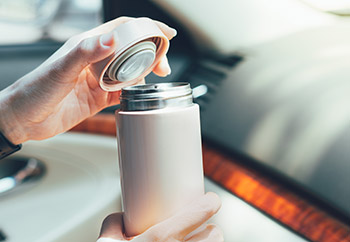
Why it’s bad:
Like the first two items on our list of what you can’t put in the microwave, the metal in most travel mugs and insulated bottles can severely damage your microwave. Because these containers are known for how well they insulate heat, some people may try to quickly warm up beverages in them. However, they can be just as dangerous as a fork or a sheet of foil.
What happens:
Like what happens when you mistakenly microwave other metal materials, there’s the risk of sparks and fire, or damage to your appliance when you microwave a travel mug that is not certified as safe by the manufacturer.
4. Polystyrene
Why it’s bad:
These takeout containers (often referred to by the brand name “Styrofoam ™” — and popular with many restaurants) are made of polystyrene, which is a light material that doesn’t hold up well against the heat source your microwave uses. Depending on how much heat is applied to polystyrene, it can melt down into a harmful liquid or gas.
What happens:
Melted polystyrene and its fumes can leach into your food and make you very sick. So, when you’re hungry, always move takeout or leftovers from to-go containers like these to a microwave-safe dish before heating.
Note: Some polystyrene containers have been ruled by the FDA as being microwave safe. Be sure to check your food packaging in case your container is one of these.
5. Single-Use Plastic Containers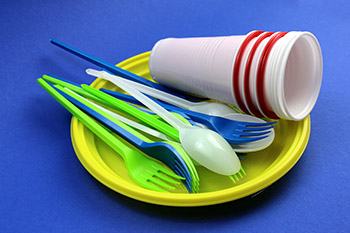
Why it’s bad:
At first glance, plastic baggies and food containers like butter tubs may seem like typical microwavable food storage containers, so you may be surprised to see them on this list of what not to put in a microwave. The fact is these types of containers feature less dense plastic concentrations than dedicated containers in many well-known food storage brands. So, like polystyrene, thinner non-microwavable plastic containers break down easily when exposed to microwaves.
What happens:
Like the harmful chemicals found in polystyrene, many of the substances in single-use plastics, such as BPA and phthalates, can leach into your food when heated and result in long-term health consequences. There’s also the risk that when these kinds of plastics melt, they could ignite and damage your microwave.
6. Some Cardboard Products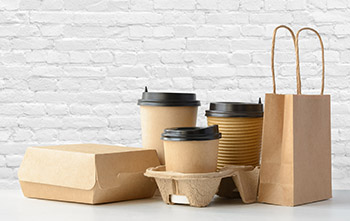
Why it’s bad:
Because you can safely put untreated paper towels, plates, and bowls in the microwave, and cardboard is made from paper, it must be safe as well, right? Unfortunately, if you’re wondering, can you microwave cardboard, the answer is, it depends.
Some cardboard containers include materials that aren’t safe for microwaves. Some feature metal handles that can damage your appliance. Others contain heat-insulating materials that can melt and leach into your food. Some are even held together with toxic adhesives. Because the safety of cardboard can vary so greatly, it’s best to keep cardboard containers on your list of what not to put in a microwave, unless it is clearly labeled microwave safe.
What happens:
It depends on what the cardboard has been treated with, but the two main results are that your food will be contaminated, or your microwave will be damaged due to hidden metals and chemicals.
7. Paper Bags
Why it’s bad:
Based on the information in the previous tip, paper bags may seem more microwave-safe than cardboard, but even these shouldn’t go in the microwave. Many paper bags are treated to repel oil and grease, making them both flammable and capable of producing toxic fumes when heated.
What happens:
When heated in the microwave, paper bags can catch on fire and produce harmful fumes.
8. Some Ceramicware
Why it’s bad:
The list of what you can’t put in the microwave surely ends with ceramics, right? Wrong. Some ceramic cookware can only stand up to high heat when treated with a special glaze. Be sure to check your cookware for labels that indicate each piece in your set is safe for your microwave oven.
What happens:
Applying high levels of heat to non-microwave-safe ceramic cookware can result in the items cracking or shattering, rendering them useless. It won’t likely damage your microwave, but it’ll make a mess of whatever was inside.
9. Some Glass Containers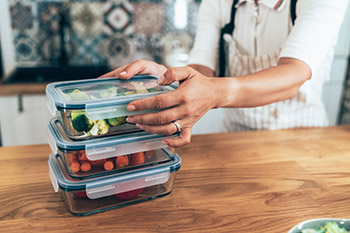
Why it’s bad:
Even glass food storage containers can be made in varying densities, some of which aren’t designed to hold up to intense heat after the glass is formed and cooled. High-density glass in many food containers can withstand the heat of a microwave and even a broiler, but low-density glass, found in some glass jars and stemware, can't. Look for a microwave-safe label on glass containers before heating them in this manner.
What happens:
Low-density glass can crack or shatter, sometimes damaging your microwave in the process. If the glass has stylish air bubbles in it, often an indicator that it is hand-blown, it could explode when heated, destroying the glass, damaging the microwave, and potentially causing you harm.
10. Nothing
Why it’s bad:
What not to put in a microwave also includes nothing at all. Running an empty microwave doesn’t leave anything to absorb the heat, which means the microwaves are absorbed by your appliance.
What happens:
If you run a microwave when it is empty for a short amount of time, nothing will typically happen. However, if it runs too long on empty, it can cause your microwave to overheat, which can then either cause a fire or break your appliance.
What can’t you put in the microwave? The items listed above. So, what can you put in the microwave? The list is much longer. Most anything that contains a bit of moisture will absorb microwaves and can be placed in your appliance—this includes most natural food items. But remember, pouring water over any of the items on the list above won’t make them microwave-safe.
We hope this guide will help you determine which of many easily identifiable items can be safely heated in your microwave. When it comes to judging whether more uncommon items are microwave-safe or not, the wisest decision is to check labels. If an item doesn’t explicitly state that it can be microwaved, it’s best not to heat it in your microwave. When in doubt, use your stove or oven instead.
Learn tips on how to clean a microwave the natural, nontoxic way
FAQs About Microwave-safe Use
What are the 3 safest materials you can use in a microwave?
Heat-proof glass, heat-proof ceramic, and untreated paper are the three safest things you can use in your microwave. However, not all forms of ceramic, glass, and paper are suitable for heating in your microwave, so be sure to inspect the items and look for any labels before using them.
Can you microwave an egg?
While you can crack an egg and heat the yolk and whites in a microwave-safe container, a whole egg with its shell should also be placed on the list of what not to put in a microwave. Steam will accumulate under the shell, which will cause it to break or explode, leaving you with a runny mess to clean.
Why can’t you microwave some ramen noodles?
Most instant ramen noodles come in a container made of polystyrene—which as described above, is typically not microwavable.
Polystyrene breaks down under the heat of a microwave, but it won’t when you pour hot water straight into the container per the instructions on the package. For this reason, these products recommend that you heat the water first and then pour it over the ingredients in the polystyrene cup.
What foods are not microwavable?
In addition to whole eggs, it’s also not recommended to heat previously uncooked chili peppers in the microwave. Capsaicin can turn into a sort of mist when quickly heated, and when you open the microwave door, you may get hit with a sort of homemade pepper spray. Other than chili peppers, most non-frozen foods are considered microwave-safe and aren’t likely to damage your appliance.
Microwaves make mealtime easier. If you have a built-in microwave in your kitchen, learn how a First American home warranty can help when it, or any other covered appliance or home system, breaks down unexpectedly. Learn more or get a free quote today
The contents of this article are provided for general guidance only. First American Home Warranty does not assume any responsibility for losses or damages as a result of using this information.


This article is about...