
Ceiling Fan Problems and Solutions Guide
OCTOBER 16, 2024 | Home Care Buzz Experts | 7 minute read
Ceiling fans are a popular addition to many homes, providing both style and comfort. They help reduce energy costs by circulating air, making your home feel cooler (and giving your HVAC system a break). However, like any appliance, ceiling fans can encounter issues over time. Common problems include fans that won't turn on and fans that make noise or wobble during operation. Regular maintenance can prevent many of these issues, but sometimes troubleshooting is necessary.
This guide will walk you through ceiling fan troubleshooting, covering common problems and their solutions. If troubleshooting doesn't resolve your problem, it might be time to consider buying a new ceiling fan. To help keep your ceiling fan running smoothly and efficiently, try the following solutions to common ceiling fan problems.
Problem 1: Ceiling Fan Won't Turn On
If you use your ceiling fan for temperature control or even need it to fall asleep, it can be frustrating when it breaks. Here's how you can address this issue:
Steps to Solve:
- Check the power source:
- Ensure the fan is plugged in or the wall switch is flipped on. Sometimes, the simplest solutions are the easiest to overlook.
- Inspect the circuit breaker:
- Check your electrical panel to determine if the circuit breaker for the fan has tripped. If it has, reset it by switching it off and then on again.
- Verify remote control settings:
- If your fan operates with a remote control, make sure the batteries are fresh and the remote is working properly. Sometimes, reprogramming the remote can resolve the issue.
- Examine internal wiring:
- Turn off the power at the breaker before inspecting the fan's wiring connections. Loose or frayed wires can prevent the fan from operating.
DIY or Pro?
While many ceiling fan problems can be fixed with simple DIY steps, internal wiring issues may require the expertise of a professional. If you're uneasy about working with electrical components, it's best to hire an electrician.
Problem 2: Ceiling Fan Making Noise
A ceiling fan noise problem can be annoying and disruptive. Here are some steps to help you eliminate the noise:
Steps to Solve:
- Tighten loose screws:
- Check the screws on the fan blades, light fixtures, and motor housing. Loose screws can cause rattling and vibrations.
- Check for debris in motor housing:
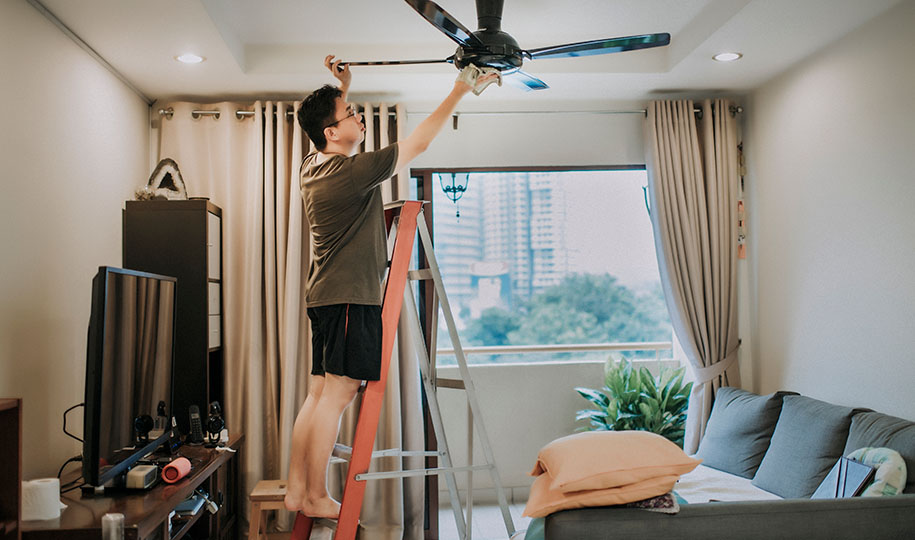
- Turn off the power and inspect the motor housing for any debris or dust buildup. Clean it out to ensure smooth operation.
- Lubricate moving parts:
- Apply a few drops of lubricant to the moving parts, such as the bearings, to reduce friction and noise.
- Balance the blades:
- Use a balancing kit to ensure the fan blades are evenly balanced. Imbalanced blades can cause a ceiling fan noise problem.
DIY or Pro?
Most ceiling fan noise problems can be fixed with simple DIY steps. However, if the noise persists and seems to be coming from the motor, it might be time to call a professional.
Problem 3: Ceiling Fan Light Not Working
Dealing with ceiling fan light problems can be inconvenient and may leave you in the dark. Here's how to fix it:
Steps to Solve:
- Replace the light bulb:
- The first step is to replace the bulb with a new one. Sometimes, the issue is simply a burned-out bulb.
- Check the light kit wiring:
- Turn off the power at the breaker and inspect the wiring connections in the light kit. Loose or disconnected wires can prevent the light from working.
- Inspect the pull chain switch:
- If your ceiling fan uses a pull chain to operate the light, ensure the switch functions correctly. A faulty switch can disrupt the electrical flow.
- Test the light socket:
- Test the light socket by using a multimeter to check for power. If there is no power, the socket may need to be replaced.
DIY or Pro?
You can easily replace the light bulb and inspect the pull chain switch yourself. However, if the issue involves ceiling fan light problems related to wiring, it's best to call a professional to ensure safety and proper repair.

Problem 4: Ceiling Fan Wobbling or Shaking
A ceiling fan shaking problem can be both annoying and potentially dangerous. Here's how to stabilize your fan:
Steps to Solve:
- Balance the blades:
- Fans can wobble because of uneven blades. Ensure that all fan blades are aligned and balanced.
- Tighten blades screws:
- Check and tighten all the screws that attach the blades to the motor. Loose screws can contribute to wobbling.
- Use a balancing kit:
- Purchase a ceiling fan balancing kit and follow the instructions to balance the blades properly. This can help reduce shaking.
- Check the mounting bracket:
- Turn off the power and inspect the mounting bracket to ensure it is securely fastened to the ceiling. A loose bracket can cause the fan to wobble.
DIY or Pro?
Balancing the blades and tightening screws are tasks you can easily do yourself. However, if the ceiling fan shaking problem persists and appears to be due to structural issues, it's best to call a professional.
Problem 5: Ceiling Fan Running Slow
A ceiling fan's slow speed problem can make your fan less effective. Here's how to get it back up to speed:
Steps to Solve:
- Clean and lubricate the bearings:
- Over time, dust and dirt can accumulate in the fan's bearings, causing it to run slowly. Turn off the power, clean the bearings, and apply a few drops of lubricant to ensure smooth operation.
- Check the capacitor:
- The capacitor helps regulate the fan's speed. If it's faulty, the fan may run slowly. Testing or replacing a capacitor is best handled by a professional.
- Ensure proper voltage:
- Make sure the fan is receiving the correct voltage. Check the voltage supply with a multimeter. Inconsistent or low voltage can cause a ceiling fan slow speed problem.
- Adjust the speed settings:
- Verify that the fan's speed settings are correctly adjusted. Sometimes, the solution is as simple as moving the speed switch to the correct setting.
DIY or Pro?
You can clean the bearings and adjust the speed settings yourself. However, if the issue involves the capacitor or voltage, it's best to call a professional.
Problem 6: Ceiling Fan Remote Not Working
A non-functioning ceiling fan remote can be frustrating and inconvenient. Here's what to do:
Steps to Solve:
- Replace the remote batteries:
- The most common cause of a non-functioning remote is dead batteries. Replace them with new ones to see if this resolves the issue.
- Reset the remote control:
- Sometimes, resetting the remote can fix the problem. Refer to the remote's manual for instructions on how to reset it.
- Reprogram the remote:
- If resetting doesn't work, try reprogramming the remote. This process can vary by model, so consult the manual for specific instructions.
- Check the receiver unit:
- The receiver unit inside the fan can sometimes fail. Turn off the power, access the receiver unit, and ensure all connections are secure. If the receiver is damaged, it may need to be replaced.
DIY or Pro?
Most issues with a ceiling fan remote not working can be resolved with simple DIY steps like replacing batteries or reprogramming the remote. However, if the problem lies with the receiver unit, it might require professional assistance.
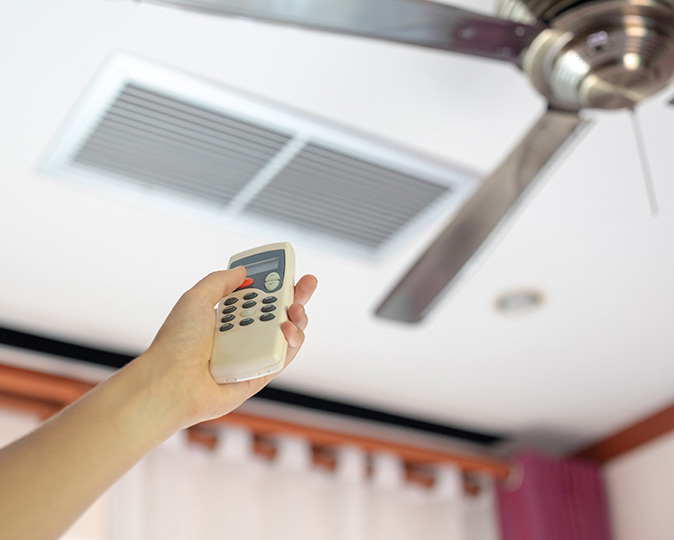
Problem 7: Ceiling Fan Reversing Direction
A ceiling fan reversing direction unexpectedly can be puzzling and inconvenient. Here's how to get it back on track:
Steps to Solve:
- Check the reverse switch position:
- A switch on most ceiling fans or remotes allows the blades to be reversed. Ensure the switch is in the correct position for your desired airflow direction.
- Inspect the wiring connections:
- Turn off the power and inspect the wiring connections in the fan. Loose or crossed wires can cause the fan to reverse direction. Ensure all connections are secure and correctly aligned.
- Ensure proper blade installation:
- Verify that fan blades were installed correctly according to the manufacturer's instructions. If they weren't oriented correctly, it could cause air to move in the wrong direction despite the down rod turning in the right direction.
DIY or Pro?
Checking the reverse switch position and ensuring proper installation are usually simple DIY tasks. However, if the problem involves wiring connections, it's best to call a professional to avoid any safety hazards.
Problem 8: Ceiling Fan Wiring Problems
Ceiling fan wiring problems can be serious and require careful attention. Here's how to address them safely (if you're comfortable working with electricity):
Steps to Solve:
- Turn off power before inspecting:
- Always turn off the power at the circuit breaker before inspecting any wiring to prevent electrical shock.
- Check for loose or frayed wires:
- Look for any loose or frayed wires. Loose connections can cause the fan to malfunction, and frayed wires can be a fire hazard.
- Ensure correct wire connections:
- Make sure all wire connections are secure and correctly matched according to the fan's wiring diagram. Incorrect connections can prevent the fan from working properly and pose fire hazards.
- Replace damaged wires:
- If you find any damaged wires, replace them with new ones. Using damaged wires can lead to further electrical issues and pose safety risks.
DIY or Pro?
While some minor wiring inspections can be done yourself, ceiling fan wiring problems often require the expertise of a professional. For safety and to ensure the job is done correctly, it's best to call an electrician.
When to Buy a New Ceiling Fan or Hire a Pro
Deciding when to buy a new ceiling fan or hire a professional for repairs can be challenging. Here's what to consider:
Assess the Age and Condition of Your Fan
If your ceiling fan is old and frequently experiencing issues, replacing it might be more cost-effective. Newer models are often more energy-efficient and come with advanced features.
Consider the Cost of Repairs vs. Replacement
If repairs are costly and frequent, investing in a new ceiling fan could be a better long-term solution. This is where installing a ceiling fan professionally comes into play. With a professional installation, you can ensure a safe and correct installation of your ceiling fan. Pros have the expertise to handle complex ceiling fan problems and solutions, ensuring optimal performance and longevity.
Know the Best Ceiling Fan Direction
Another important factor is knowing the best ceiling fan direction for each season, which can significantly improve your fan's efficiency and your comfort at home.
Home Warranty for Ceiling Fans
A First American home warranty can cover the cost of repairs and replacements for your home's ceiling fans when one of them breaks from normal wear and tear. Ceiling fan coverage can also save you money and provide peace of mind on many other home systems and appliances. To start protecting your ceiling fan and more, get a free quote today.
The contents of this article are provided for general guidance only. First American Home Warranty does not assume any responsibility for losses or damages as a result of using this information.
Please be aware that if you disassemble a covered system or item, it can invalidate your home warranty or manufacturer's warranty.





Home Care Buzz Experts
The First American Home Care Buzz team is made up of experienced home warranty writers and editors. Our team provides valuable insights and information to help homeowners like you meet the daily challenges of homeownership.
This article is about...