
In addition to your heating and cooling system, a ceiling fan can be one of the best ways to control the temperature in your home. Did you know that, depending on the ceiling fan direction, it can not only help cool a room in scorching summer months but can also bring warm air from your heater down from the ceiling to keep you toasty in winter? Ceiling fans can be great and useful additions to your home, but learning how to choose a ceiling fan that fits your home’s needs can be just as important as the decision to install one.
In this ceiling fan guide, we'll share the factors you need to consider when choosing the right one for your home, so you can find the right combination of functions and features that will satisfy your family.
Location, Location, Location
The first factor to consider is whether your ceiling fan is going to be indoors or outdoors. An outdoor ceiling fan may seem unnecessary, but placing one in covered outdoor patios can make spending time outdoors in warmer months a breeze. Big ceiling fans with more than 60-inch blades typically aren't the best for outdoor usage, but smaller-sized fans can be great options, and some are designed for outdoor and indoor use. However, finding one designed to hold up against wet weather is a good idea, especially if it will be in a location exposed to the elements.

If you plan to install a ceiling fan indoors, consider the size of the room and the ceiling where it will be placed. First, check to see if the ceiling where you'd like the fan has wiring connections; you can run electrical wires to that part of the ceiling, but it's a much more complicated process. Also, make sure the ceiling where you're planning to place the fan can support the weight of your chosen model.
How to Choose Ceiling Fan Size
Perhaps the most important part of any ceiling fan buying guide is choosing the correct size fan for your needs. You don't want to bring home a fan only to find out it's too big for your ceiling, but you do want to make sure it's powerful enough to heat or cool based on the room's size. What size ceiling fan is right for you and your room is usually determined by a ratio of square footage to blade length. Here's a ceiling fan size guide to help you figure out what size you need.
| Room Square Footage | Recommended Blade Span |
|---|---|
| <100 | 36 inches |
| 100-200 | 42 inches |
| 200-300 | 52 inches |
| 300-400 | 56 inches |
| >400 | 60-72 inches |
If you're planning on installing big ceiling fans in the 60" to 72" blade span range, make sure your ceiling can support the weight of these fans. If you don't have the support for them, consider using multiple fans in the 50" range to provide similar airflow while distributing weight more evenly.
Blade Count
It may seem arbitrary, but the number of blades on a ceiling fan has a lot to do with its performance. Fewer blades circulate more air because they put less strain on the motor due to the decreased weight, allowing the blades to spin faster. However, the more blades there are, the more balanced your ceiling fan becomes, meaning less wobbling and therefore less noise.
In addition to a larger number of blades, an even number of blades can also balance your fan better and operate more quietly. Most residential, indoor ceiling fans feature four to five blades for a balance between airflow and noise levels, but there can be special considerations that cause you to choose fewer or more blades.
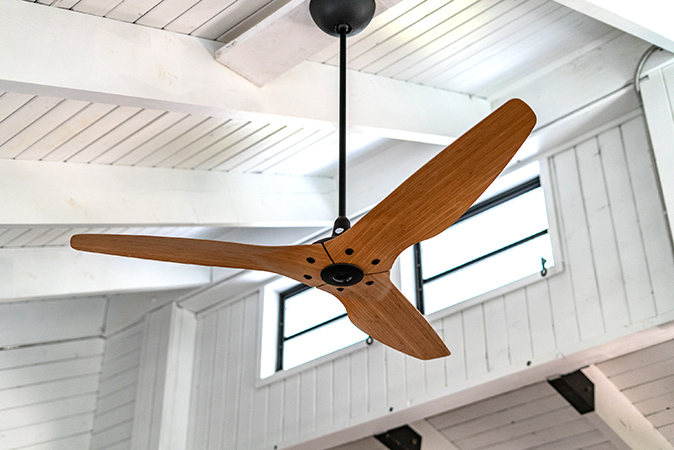
For example, if you're selecting a ceiling fan for a baby or toddler's room, you may want six blades for a more peaceful night's sleep. If you are placing a ceiling fan in a high-traffic part of your home that is naturally noisier, you may value the performance of fewer blades over quietness. Additionally, many common summer energy-saving tips include selecting a fan with fewer blades that require less energy to move during months when you're running your ceiling fan nearly every day.
Different Mount Types
The type of mounting you use to attach the base of your fan to the ceiling is crucial, and knowing how to choose a ceiling fan mount largely depends on how high your ceilings are, or the distance between the ceiling and the floor. Mount types come in two categories: standard and low profile.
Standard mounts have a down rod, or hollow metal bar, that extends from the fan's base on the ceiling to the actual fan. If your ceiling height is greater than eight feet, you'll probably want to choose a standard mount so that your fan can hang low enough to provide good air circulation. Down rod lengths can vary between 7 and 14 feet to accommodate even the tallest ceilings, and the motor of a standard mount ceiling fan is typically larger, which ideally should run further away from the ceiling to prevent damage.
Low-profile mounts also have a down rod, but it's typically less than a foot long if it's visible at all (like flush mount ceiling fans). The shorter down rod and slimmer motor keep these types of ceiling fans closer to the ceiling and offer adequate circulation for ceiling heights less than eight feet.
Lighting
There are many features (which we'll discuss below) that can make a particular fan a better fit for your needs. Considering whether it has lights is probably the most important feature when you choose a ceiling fan. Many homeowners prefer more unique lighting fixtures in their rooms—whether it be mood-setting recessed lighting or aesthetically pleasing lamps. However, selecting a ceiling fan with lighting can help make life easier by combining the controls you need for air and lighting in one central location.
Features
Sure, any good ceiling fan buying guide covers the functional aspects that are crucial during your shopping process, but it's the modern, optional features that can really help you decide what's a great fit for your home's personality and design. You may be familiar with some more standard features, like remote controllability, custom switches, or dimmers on models that have lights, but there's even more to consider.
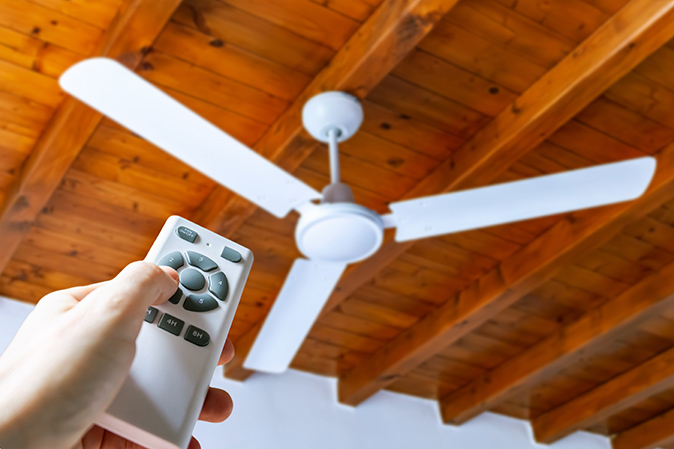
Why settle for a handheld remote control when you can install a smart fan that can be powered on and off with an app from nearly anywhere? And while lighting is certainly a popular feature, you can control the entire ambiance of a room sporting a ceiling fan with lights featuring a full spectrum of colors, color temperature, and brightness. Since ceiling fans are mostly about convenience, consider the different features that can make your daily routine more convenient.
Knowing how to buy a ceiling fan that suits your room and home doesn't have to be difficult when you know what aspects to consider. When you find one that's just right, make sure to include it on your homeownership checklist of items to maintain so that it can serve you and your family for years to come. Want another way to keep that ceiling fan running longer? Protect it with a home warranty from First American. To learn more about what else our warranties cover, get a free quote today.
FAQs About How to Choose a Ceiling Fan
How do I choose the right size ceiling fan?
When people ask, "What size ceiling fan do I need?" they're usually referring to the diameter of the blade span. The size of your blade span depends on the square footage of the room where the ceiling fan is being placed, so you'll need to measure that before you select your fan.
How do you know if a ceiling fan is too big for a room?
If the blades of your ceiling fan are closer than 18 inches away from the room's walls, the ceiling fan is likely too big for the space.
The contents of this article are provided for general guidance only. First American Home Warranty does not assume any responsibility for losses or damages as a result of using this information.






Home Care Buzz Experts
The First American Home Care Buzz team is made up of experienced home warranty writers and editors. Our team provides valuable insights and information to help homeowners like you meet the daily challenges of homeownership.
This article is about...