How to Unclog a Kitchen Sink: 6 Easy Ways
MARCH 31, 2025 | Home Care Buzz Experts | 5 minute read
A clogged kitchen sink can quickly throw off your daily routine. Dishes pile up, water won’t drain, and the sink starts to smell. Luckily, you don’t always need a plumber to fix the problem.
Here’s how to fix a blocked kitchen sink using simple methods, plus ways to prevent future clogs and plumbing stoppages.
Why Does Your Kitchen Sink Get Clogged?
Kitchen sinks can clog for several reasons, including:
- Grease and oil: Pouring grease down the drain can lead to sticky residue inside your pipes, trapping food and other debris.
- Food particles: Food scraps like coffee grounds, pasta, eggshells, and fibrous vegetables can easily cause issues with your kitchen drain.
- Soap scum: Some soaps contain fats that mix with minerals in water and can leave a sticky film that makes your sink drain slowly.
- Small objects falling in the drain: Items like bottle caps, utensils, and bits of sponges or scrub pads can get stuck and block water flow.
6 Easy Ways to Unclog a Kitchen Sink
You can try a few different methods to unclog a kitchen sink before calling in the professionals. Here are six of the best ways to unclog a kitchen sink yourself:
1. Examine the Garbage Disposal
Sometimes, a clogged or jammed garbage disposal is the reason your sink won’t drain. If your disposal is stuck, it can prevent water from flowing properly. Here are the steps to take:
- Step 1: Turn off the garbage disposal. Unplug it or switch off the power at the circuit breaker for safety.
- Step 2: Check for visible blockages. Use a flashlight to look inside for food scraps or foreign objects.
- Step 3: Manually turn the blades. Insert a wrench into the bottom of the unit and turn it back and forth to loosen any jams.
- Step 4: Reset the garbage disposal. Press the reset button on the bottom of the unit, if it has tripped.
- Step 5: Run water and test the disposal. Turn the power back on and see if the sink drains properly.
If your garbage disposal is working but the sink is still clogged, try one of the other methods for clearing clogged drains below.
2. Flush It With Boiling Water
This method works best for greasy clogs but may not be effective for food scraps or solid blockages. Hot water can dissolve grease and loosen minor buildup in your drain.
- Step 1: Boil a large pot of water. Heat the water until it reaches a rolling boil.
- Step 2: Carefully pour the hot water into the drain. If your sink is full of standing water, remove as much as possible first.
- Step 3: Wait a few minutes, then check the drain. Run the tap to see if the water flows freely.
If the drain does not flow freely, follow the steps above a couple more times to flush the drain more.
3. Use Baking Soda and Vinegar
Baking soda and vinegar are household essentials to use all around the home. The fizzing reaction from baking soda and vinegar can help loosen gunk inside your pipes.
- Step 1: Pour one cup of baking soda down the drain. Try to get it as far down as possible.
- Step 2: Slowly add one cup of white vinegar. The mixture will bubble up as it works through the clog.
- Step 3: Cover the drain for about 15 minutes. This helps the reaction break apart buildup inside the pipes.
- Step 4: Flush with boiling water. Pour a pot of hot water down the drain to wash away any remaining debris.
4. Use a Sink Plunger for Stubborn Clogs
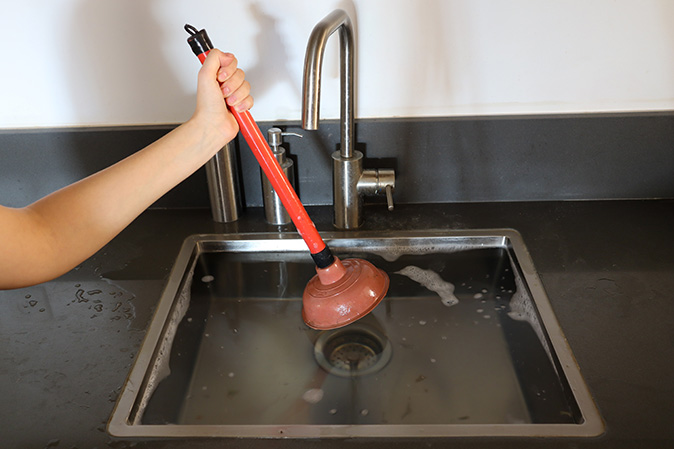
Plungers have a reputation as mainly a bathroom tool, but they work great in a pinch for the kitchen as well (just be sure not to use the same one for both rooms). A plunger can help push water forcefully through the drain, dislodging clogs.
- Step 1: Fill the sink with a few inches of water. This helps create a seal around the plunger.
- Step 2: Position the plunger over the drain opening. Make sure it fully covers the hole.
- Step 3: Use firm, quick plunges. Push and pull for about 30 seconds to create suction.
- Step 4: Remove the plunger and check the water flow. If necessary, repeat the process a few times.
5. Remove and Clean the P-Trap
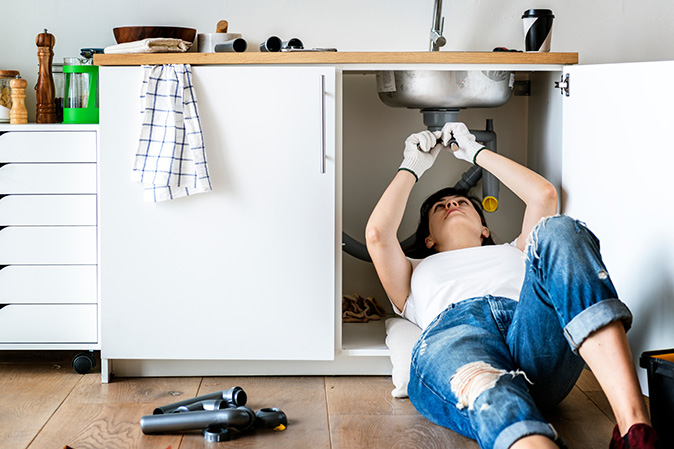
The P-trap is the curved pipe under your sink that collects debris before it moves further into your plumbing system. This is an easy spot where clogs can develop and is often the area of concern.
- Step 1: Shut off the water. Turn off the water supply at the sink. If there’s no shutoff valve, turn off the main water supply to your home.
- Step 2: Place a bucket underneath the P-trap. This will catch any water and gunk that spills out.
- Step 3: Unscrew the P-trap. Use a wrench or your hands to loosen the connectors.
- Step 4: Clear out any debris inside. Rinse the trap with warm water or scrub it with a brush.
- Step 5: Reattach the trap and test the drain. Secure everything back in place and run water to check if the clog is gone. Ensure all the connections are leak-free following assembly.
6. Use a Drain Snake for Deep Clogs
A drain snake (or plumber’s auger) can help pull out clogs that are further down the pipe.
- Step 1: Insert the snake into the drain. Keep feeding it in until you feel resistance.
- Step 2: Turn the handle to break up the clog. Rotate the auger to grab onto the debris.
- Step 3: Pull out the snake and remove any gunk. If you catch food or hair, dispose of it in the trash.
- Step 4: Run water to check the drain. If needed, repeat the process until the clog is fully clear.
Tips to Avoid Clogging Your Kitchen Sink
To keep your sink draining smoothly:
- Use the garbage disposal (if you have one): Running the disposal regularly can help break down food scraps before they cause any clogs.
- Be mindful of what you wash down the sink: Avoid putting starchy foods, fibrous vegetables, or coffee grounds down the drain. Also, avoid pouring grease down the drain. Let it cool and throw it in the trash instead.
- Use a drain strainer: This catches food scraps before they reach your pipes.
- Flush your drain regularly: Pour boiling water down the sink every once in a while to help prevent buildup.
Avoid Costly Plumbing Repairs With a Home Warranty
Even with regular maintenance, clogs and other plumbing issues can still happen. A home warranty from First American Home Warranty can help cover unexpected repairs or replacements, including plumbing stoppages.
If you have coverage, you’ll have peace of mind knowing you can request service for a clogged sink drain, which can help you keep it from turning into a bigger problem. Get a free quote today and see how a home warranty can protect your budget.
The contents of this article are provided for general guidance only. First American Home Warranty does not assume any responsibility for losses or damages as a result of using this information.
Please be aware that if you disassemble a covered system or item, it can invalidate your home warranty or manufacturer's warranty.



Keep Reading