
How to Remove Smells from Dishwashers
AUGUST 16, 2023 | Home Care Buzz Experts | 6 minute read
If you've ever lived somewhere without a dishwasher, you can appreciate how crucial this appliance can be to a household routine. You rely on your dishwasher to keep your dishes, drinkware, utensils, and more sanitary, but if you start to notice your dishwasher smelling unpleasant, your dishes may not be as clean as you think. We'll go over all the potential problem areas as well as dishwasher odor removal tips that can help keep your dishwasher and kitchen smelling fresh and provide peace of mind that your dishes are truly clean.
Common Causes of Bad Dishwasher Smells
Our dishwashers see a lot of spoiled food debris, so that can be the first common-sense explanation when homeowners notice bad smells from dishwashers. While old food is usually the source, finding the exact cause and where the issue is located can be a bit more complex. Let's go over some specific parts and mechanisms in your dishwasher that commonly collect odor-causing bacteria.
Walls and Tub
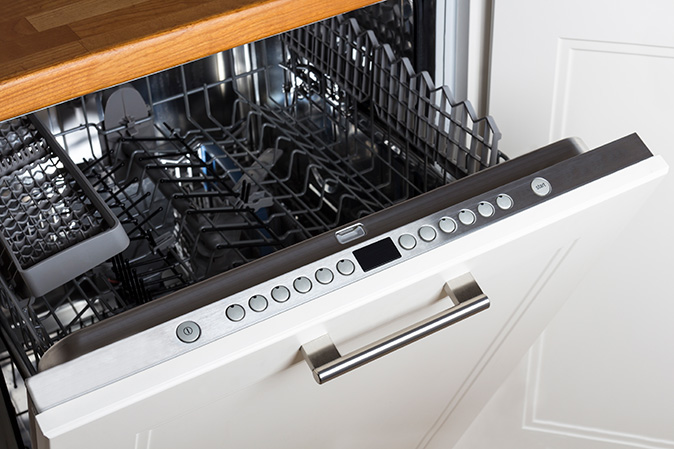
When most people load and unload their dishwasher, they focus on their dishes' cleanliness, not the interior of their appliance. However, it is possible for food particles to be sprayed onto these interior surfaces, which can then sit and form bacteria (eventually leading to unpleasant odors). Sometimes, the easiest way to remove dishwasher odor is simply to give its interior a good scrubbing.
Utensil Basket
This removable feature of your dishwasher is another place where food debris can easily accumulate and become smelly. While most of your utensil basket's surface is in frequent contact with water and soap during the cleaning cycle, there are some nooks and crannies where food can hide, sometimes even turning into a paste-like substance. It's recommended that you remove and clean this basket once a month to prevent dishwasher odor and keep your appliance sanitary.
Garbage Disposal
Many garbage disposals empty out into the same line that runs to your dishwasher, but an air gap typically prevents food debris from traveling from the disposal to the dishwasher. However, the air gap can become clogged over a long period and if the disposal drain also becomes clogged, it can cause a backflow of water and food particles from the sink to the dishwasher.
To discover more ways to properly operate your disposal, check out our Garbage Disposal Safety Tips.
Dishwasher Filter
As the part of your dishwasher that's designed to catch food debris—both to prevent it from clogging the drain and being sprayed back on your clean dishes—it's natural for your drain filter to become a source of unpleasant dishwasher smells. How often you should remove and clean your dishwasher filter depends on how often you use it, but at least once a month should keep it from growing bacteria and developing odors. You probably won't need to do this as often if your dishwasher has a self-cleaning filter, but even these still need to be manually cleaned occasionally.
Drain
If your dishwasher filter is broken or doesn't fit correctly, food debris could bypass the filter and clog the drain. If this is the case, you'll likely notice water standing at the bottom of your dishwasher's basin, but it's also possible to have food partially stuck in the drain. Often, preventing dishwasher odors is as simple as inspecting your drain and filter.
Gasket Seal
If you're unfamiliar with the term, the gasket seal is the strip of rubber that runs along the edge of your dishwasher door. While it's less likely to accumulate bacteria and soap scum than the walls, basin, and arms of your dishwasher, it can still trap moisture and food particles that become unsanitary and smelly over time.
Water Filter and Hose
If you have a water filter for your dishwasher and you notice odd smells in combination with hard water deposits or calcium residue, your water filter may be broken. Not only can these unfiltered elements build up on your dishes and the interior of your appliance, but they could also be building up in the drain hose. Removing dishwasher odor from your hose is a little more difficult, but crucial to keeping your appliance sanitary.
How to Clean a Smelly Dishwasher
Getting rid of bad smells from dishwashers can depend on which one of the sources above is causing the issue, but we'll take you through the entire step-by-step process to make sure all your bases are covered. If you reach a step that removes dishwasher odors in your appliance, feel free to ignore the rest of the steps in this guide!
Step 1: Let Your Dishwasher Clean Itself
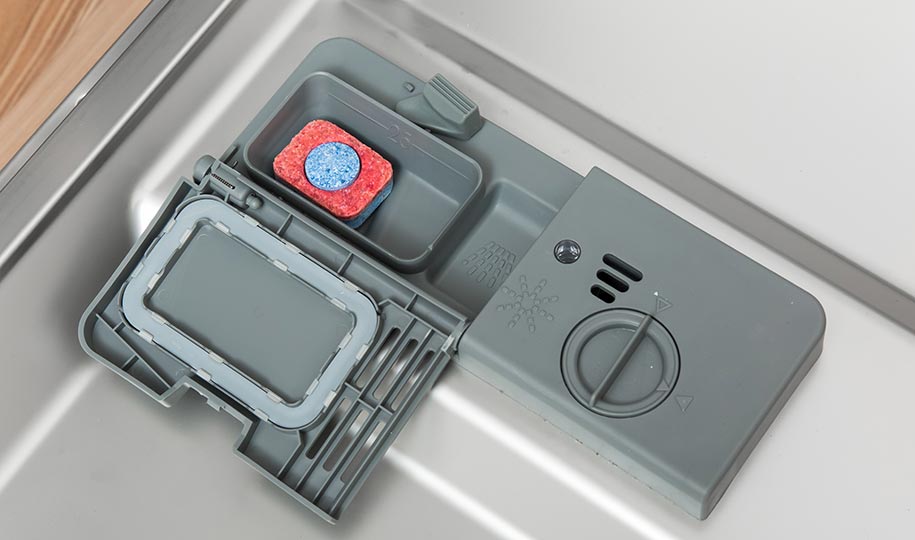
Sometimes the simplest and easiest way to get rid of funky smells in your dishwasher is to buy a packet of dishwasher cleaner and run a cycle with no dishes in your appliance. These specially formulated packets can eliminate bad smells from dishwashers caused by grease, limescale, and other substances with minimal effort.
Step 2: Clean the Gasket Seal
If there's mold or mildew on or around the gasket seal, automatically or manually cleaning your appliance's basin won't eliminate the dishwasher’s bad smell. Use a wet cloth, paper towel, or toothbrush with warm water and dish soap to wipe down the entire gasket, making sure to get into any crevices.
Step 3: Clean and Inspect the Drain Filter
If odors remain, your drain filter may be the cause. Check your dishwasher's operation manual to learn how to remove the filter; depending on the make and model, the drain filter can look like a flat grate, cylinder, or a combination of both. Either way, it will be located on the bottom of your dishwasher.
Once the filter has been removed, use our guide, How to Clean a Dishwasher Filter in 5 Easy Steps, to clean the filter.
Step 4: Clean or Clear the Drain
While you're down cleaning the drain filter and trying to remove dishwasher odors, you may notice that the smell is coming from a clogged drain. Although it can be a little gross (wearing dish gloves helps), try using your hand to feel around for and remove any unsanitary clogs. If you suspect there’s a clog that you can't quite reach, boil some water and pour it directly into the drain.
Step 5: Clean the Tub and Arm
If removing and cleaning the drain filter didn't noticeably improve the unpleasant dishwasher smell, manually cleaning the interior of your dishwasher is a good next step. While running a hot cycle with dishwasher cleaner is typically efficient, using a clean cloth or toothbrush to scrub the crevices in the arm and tub can help you remove any soap scum or mildew that may be trapped.
Natural Dishwasher Cleaning Tips
If you're not a fan of harsher chemical cleaners or just prefer to do some DIY dishwasher odor removal, there are DIY household cleaners and safer cleaning products you can use at home in place of the dish soap and dishwasher cleaning pods mentioned above. In place of a dishwasher cleaner from the store, you can place a dishwasher-safe bowl containing vinegar on the top rack of your appliance and run the hottest cycle possible. Some people find vinegar makes a better natural dishwasher cleaner and has superior sanitizing properties. And for an extra boost of cleaning power, you can sprinkle baking soda on the bottom of your dishwasher before running the vinegar cycle.
Preventing Dishwasher Odors
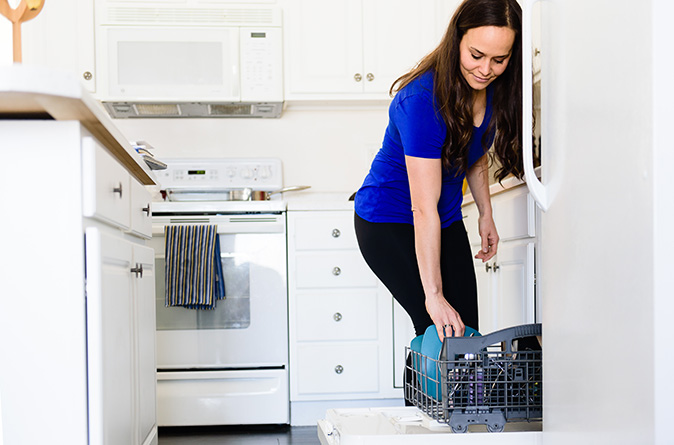
Regularly cleaning your appliance is one of the best ways to prevent nasty dishwasher smells from occurring in the first place. It's a good idea to look for food particles left over in the tub after each time you use your dishwasher. About once a week, wipe any crumbs or mildew from around the edge of the door, and remove and clean the drain filter. Once a month, run an empty, self-cleaning cycle (or the hottest cycle available) with either a dishwasher cleaner or a bowl of vinegar.
Performing regular inspections and maintenance for your dishwasher can also help keep it clean and working its best. You can make sure your appliance's water filter (if it has one), hoses, and drains are undamaged, unclogged, and in working order to prevent leaks that cause mildew smells. For more information, read our Guide to Dishwasher Maintenance 101. And when a leak does occur, a home warranty contract can help safeguard your budget against costly repairs or part replacements. Get a free home warranty quote today to find out how First American coverage can help protect your dishwasher.
The contents of this article are provided for general guidance only. First American Home Warranty does not assume any responsibility for losses or damages as a result of using this information.
Please be aware that if you disassemble a covered system or item, it can invalidate your home warranty or manufacturer's warranty.



Keep Reading





Home Care Buzz Experts
The First American Home Care Buzz team is made up of experienced home warranty writers and editors. Our team provides valuable insights and information to help homeowners like you meet the daily challenges of homeownership.
This article is about...