
What to Do When Your Dishwasher Isn't Drying Dishes
SEPTEMBER 08, 2023 | Home Care Buzz Experts | 5 minute read
If you find your dishwasher not drying your dishware completely, then your dishes aren’t considered “done.” After all, dishwashers make our lives easier by saving us time washing and drying dishes manually, and if you're doing half of the job by hand, it defeats the purpose of having a dishwasher in the first place.
If your dishwasher isn’t drying items completely or only partially drying them, there can be several reasons. If you have Dishwasher Home Warranty Coverage, you can schedule a service appointment to save you time diagnosing the problem yourself. However, many of the answers to “Why is my dishwasher not drying?” can be found without needing too much technical knowledge. Here are some of the most common reasons a dishwasher won’t dry dishes, how to fix these issues, and situations where it’s smart to throw in the towel and call a professional.
How Does a Dishwasher Dry Dishes?
Dishwashers use three methods to dry your dishware: condensation, evaporation, and heat.
Condensation drying works best with stainless steel tubs; at the end of a cleaning cycle, hot water condenses on the walls of the tub, runs down to the bottom, and drains through the filter.
Evaporation drying, like condensation drying, relies on hot water condensing and accumulating in the tub. Cracking open the dishwasher door allows the moisture to escape instead of settling on your dishes. That’s why some models are made with the ability to open the door at the end of a cycle to allow condensation to get out.
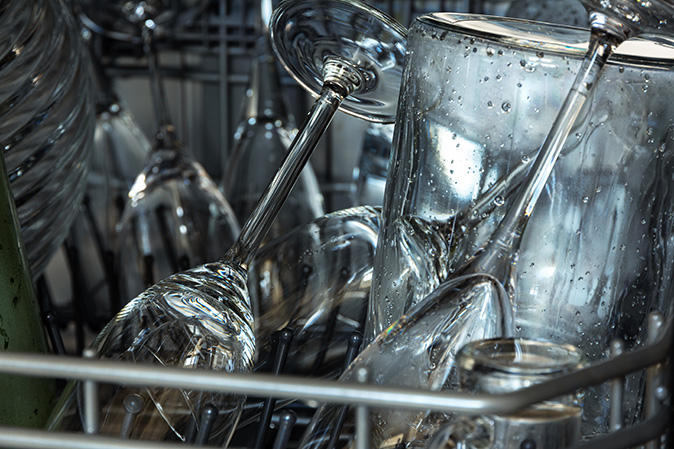
Heat drying requires a dishwasher with an electric heating element that evaporates moisture inside the closed tub. Some dishwashers also have a heated air-dry setting that uses a fan to evenly distribute hot air from the heating element for superior drying.
Heat is usually the most efficient drying method, followed by condensation and then evaporation. However, no matter which method your dishwasher uses, here are some reasons your dishwasher won’t dry dishes as well as it should.
Possible Reasons Your Dishwasher Won’t Dry
Cause #1: Incorrect Settings
If your new dishwasher doesn’t dry dishes like you’re used to, or you’re using a dishwasher you’re not familiar with, it’s possible that the heated dry function isn’t turned on. If you’re experiencing this issue with a dishwasher you’re familiar with, it’s possible that one of the buttons or knobs is misaligned, and your appliance isn’t completing a full cycle. It could even be that there’s a wiring issue in the control panel that’s preventing the drying feature from activating.
Troubleshooting Tips: If you normally use the heated dry function and find your dishwasher is still wet, double-check to make sure the feature is turned on. If your appliance has a knob control, carefully inspect it to make sure that the line on the knob lines up with the correct cycle on the control panel; if not, you may need to remove the knob and realign it. You may also want to inspect the control panel for damage.
Cause #2: Overloading the Dishwasher
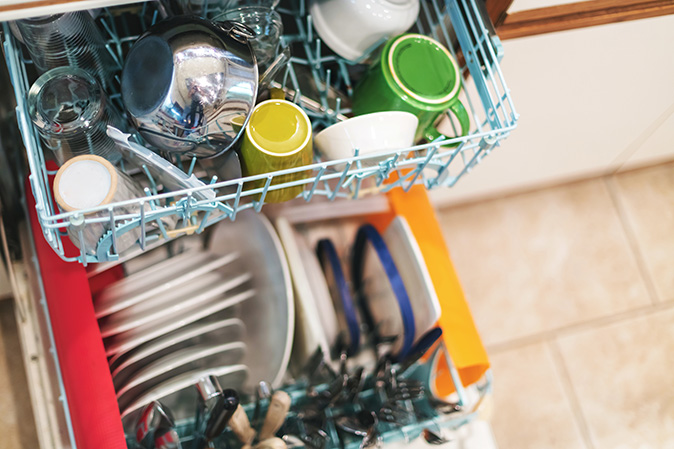
The built-in dividers on the racks of your dishwasher are there for a reason: to keep your dishes from touching one another. When plates are stacked too closely or there are too many crowding the unit, wash cycles can’t work as intended. Not only does this prevent the appliance’s arm from fully spraying dishes, it can also trap moisture and lead to your dishwasher not drying items completely. This is more common with dishwashers that use evaporation or condensation, but it can happen in heat-dry models as well.
Troubleshooting Tips: Dishwasher racks are typically designed intuitively, so you’ll likely know if you’re overcrowding or placing dishes too close to one another. Resist the urge to stuff more dishes into the tub. Try running your dishwasher more frequently if you’re experiencing this problem.
Cause #3: Broken High-Limit Thermostat
Most newer dishwashers have a thermostat that measures and regulates the water temperature during the wash cycle and the amount of heat produced while drying. If this is damaged or malfunctioning, your water might not get hot enough to condense or evaporate, or it may prevent the heating element from getting hot enough while drying, leading to your dishwasher not drying dishes.
Troubleshooting Tips: If you have access to a multimeter, read your dishwasher owner’s manual to find the location of the high-limit thermostat and use it to test whether power is flowing to the device.
Cause #4: Faulty Heating Element
The heating element is crucial to the proper washing and drying of your dishes, so if it’s damaged or malfunctioning, that could be the primary reason why your dishwasher won’t dry dishes. Cold water resulting from a faulty heating element won’t dry dishes very well through evaporation or condensation.
Troubleshooting Tips: Unplug your dishwasher and remove the bottom-front panel. Using your owner’s manual, find the terminal behind the panel that connects to the heating element. Check the terminal and the connectors for burn marks or signs of damage. Then, if you’re handy with a multimeter, remove the connectors and test to make sure the terminals are receiving power. If it is, the element itself may need replacing.
Cause #5: Faulty Steam Vent
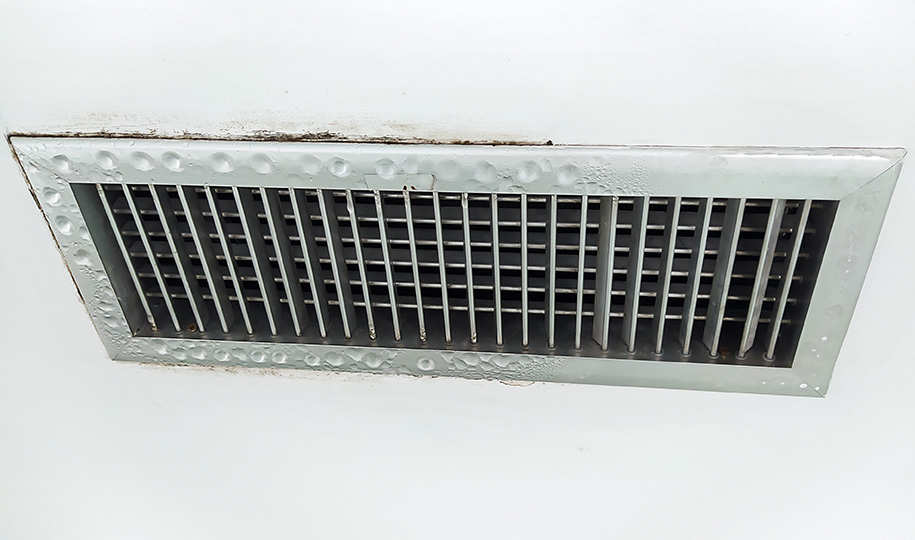
If your dishwasher has a steam vent, hot air and moisture will be released during the drying process. If this vent is blocked or not opening properly, moisture will circulate in the tub, which can explain why your dishwasher won’t dry. Some models rely on a fan to move the hot, moist air, and if this isn’t working, the air may not be able to escape.
Troubleshooting Tips: Although time-consuming, the most reliable way to see if your vent is working is to keep an eye on it during a wash cycle and look and feel for steam escaping. If it isn’t, this could be the problem.
When to Call a Pro
While most people find cleaning and maintaining dishwasher filters to be easy DIY tasks, many dishwasher troubleshooting tasks need a professional. You may have noticed that a few of the tips above require using a multimeter to test for electricity. Using a multimeter can be straightforward, but any problems you find while using this tool will require an electrician or electrical wiring knowledge. If you suspect a wiring or electrical issue is the reason your dishwasher is still wet after a cycle, you’ll likely need a qualified technician to fix the problem.
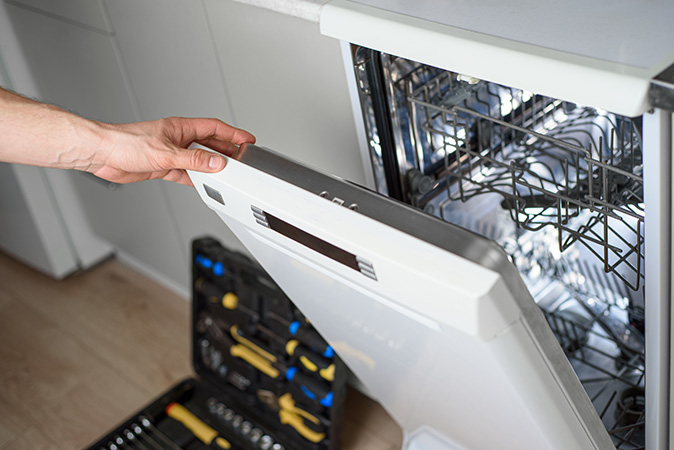
Any fix mentioned above that requires you to remove a control panel will likely require a technician. Additionally, damage to or malfunctioning of the heating element, high-limit thermostat, or vent usually needs a professional to repair or replace.
Luckily, a home warranty can cover your dishwasher when it breaks. Get a free quote today for peace of mind when it comes to covered dishwasher repairs and replacements.
The contents of this article are provided for general guidance only. First American Home Warranty does not assume any responsibility for losses or damages as a result of using this information.
Please be aware that if you disassemble a covered system or item, it can invalidate your home warranty or manufacturer's warranty.


Keep Reading



Home Care Buzz Experts
The First American Home Care Buzz team is made up of experienced home warranty writers and editors. Our team provides valuable insights and information to help homeowners like you meet the daily challenges of homeownership.
Continue Reading
This article is about...