
Everything You Need to Know About Home Improvement Loans
JULY 15, 2024 | Home Care Buzz Experts | 4 minute read
Whether you've just moved into a new home or lived in your house for years, sometimes there are home improvement projects you can't get off your mind. Larger-scale projects that go beyond the most affordable home improvement ideas can increase the value of your home and make your living space more comfortable, but they typically have high upfront costs. This may leave you wondering where you can find the funds to complete these dream projects.
Luckily, there are different types of home improvement loans that can help you tackle vital projects. However, the attractive benefits of these loans can also have significant drawbacks, so familiarizing yourself with them before starting the application process can help you avoid common pitfalls experienced by many homeowners.
In this guide, we'll cover some of the best types of loans for home improvements, their pros and cons, and how to get a home improvement loan that fits your budget, timeframe, and lifestyle.
Best Types of Loans for Home Improvements
The best type of home improvement loan for you depends on the kind of project you're using it for, how much the improvement will cost, how much equity you have in your home, and other considerations. Below are the different types of financing for home improvement projects and the kinds of improvements they're typically used for.
Best Loan for Big Projects and Good Equity: Cash-Out Refinance
This type of home improvement loan requires you to apply for a new mortgage for more money than you owe on your current mortgage. You can then take the extra money and use it for home projects that are generally on the more expensive side. If current mortgage interest rates are lower than when you purchased your home, this can be a significant benefit. The loan terms for a cash-out refinance are typically from 15 to 30 years, and these loans usually have lower monthly payments than other loan types that we describe below.
Downsides: Lower monthly payments typically only occur when you select the maximum 30-year term. If you don't plan on living in your home for 30 more years, paying off the mortgage at closing can cut into your profits on the sale. Since cash-out refinancing involves obtaining a new mortgage, you may lose money if the new interest rate is higher than your old one.

Best Loan for Long-Term Projects and Medium Equity: HELOC
A home equity line of credit (HELOC) is one of the best types of loans for home improvements that you're planning on intermittently completing over the course of years. It works like a credit card account, where you can withdraw from the total sum at will over the life of the loan, which is usually ten years. After ten years, you can no longer withdraw from the account, and you begin paying back the loan. You don't even need to use the total loan amount if you don't end up needing it. HELOCs let you borrow against the equity you've built in your home and typically feature the lowest interest rates of any other home remodeling loan. Another perk of HELOCs is that the interest is often tax deductible.
Downsides: Since you are borrowing against the value of your home, failure to repay the loan could result in the lender foreclosing on your residence. HELOCs also come with variable interest rates, meaning that your interest could increase over the life of the loan. While you don't need a high amount of equity in your home, you will need substantial equity and good credit to qualify for this type of loan.
Related: HELOC vs Home Equity Loan
Best Loan for High Equity and Regular Income: HEL
Similar to HELOCs, a home equity loan (HEL) allows you to borrow against the equity in your home. Unlike HELOCs, the loan is paid in a lump sum, has a fixed interest rate, and typically has a longer repayment period. Because the loan repayment period begins immediately, HELs can be a good choice for homeowners who have built up outstanding equity and want to start rebuilding it immediately within a traditional loan structure. Because you're borrowing against your home, interest rates are typically lower.
Downsides: Since you're using your home as collateral for the loan, HELs also come with the risk of losing your home if you can't repay the loan under the agreed-upon terms. The reason this loan is suitable for homeowners with regular incomes is that unpredictable employment puts them at risk of being unable to repay the loan, thus losing their house. Additional equity-related fees come with this loan type, including origination, appraisal, and application fees.
Related: Pros and Cons of Home Equity Loans
Best Loan for New Homebuyers: FHA 203(k) Rehab Loan
This type of home improvement loan was designed for one specific purpose — to buy a home that needs major renovations to be livable. Offered by the Federal Housing Administration (FHA), a 203(k) rehab loan lets homeowners buy and renovate a home with one single loan.
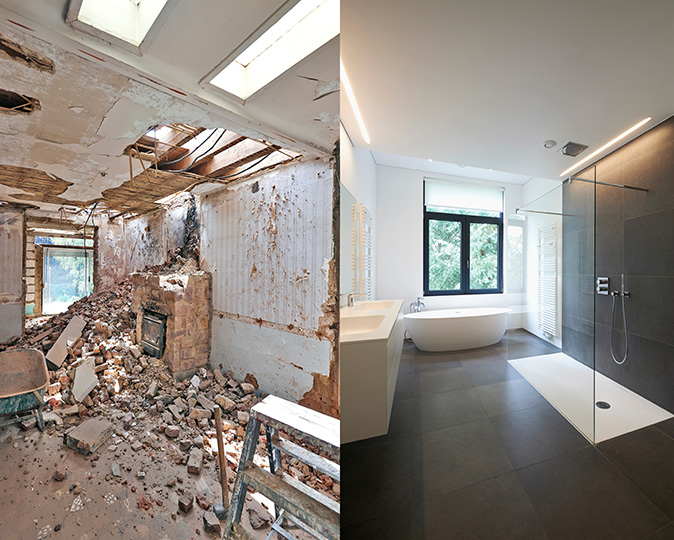
Unlike other remodeling loans, the sum that a homeowner can finance to improve their home is calculated based on the amount of their mortgage and the state where they live. However, loan terms don't vary by state, and homebuyers can choose 15- or 30-year loans. Despite its original purpose, current homeowners can obtain one of these loans for renovations by refinancing their mortgage with a fixed- or adjustable-rate mortgage.
Downsides: If you choose to use a 203(k) loan, you'll need to use FHA-approved contractors and pass an FHA inspection at the end of your home improvement project. This loan cannot be used for investment properties or for luxury improvements that don't contribute to the home's rehabilitation.
How to Get a Home Improvement Loan
Obtaining a home improvement loan is similar to getting a traditional mortgage loan. However, instead of determining how much house you can afford, you'll need to estimate how much your planned renovations will cost. Even some of the best remodeling investments require careful planning. This is also a good time to improve your credit so that you'll have a broader range of loan options available to you.
Financing for home improvements may make your remodeling dreams a reality, but they're not worth incurring massive debt or foreclosure. Knowing how to get a home improvement loan involves carefully weighing the pros and cons of these loans and choosing the best type for your budget, available equity, and comfort level. For more tips on household budgeting, check out our list of the biggest mortgage mistakes to avoid.
The contents of this article are provided for general guidance only. First American Home Warranty does not assume any responsibility for losses or damages as a result of using this information.




Keep Reading









Home Care Buzz Experts
The First American Home Care Buzz team is made up of experienced home warranty writers and editors. Our team provides valuable insights and information to help homeowners like you meet the daily challenges of homeownership.
This article is about...