
How to Stop Dishwasher Leaks: Find & Fix the Issue
AUGUST 30, 2023 | Home Care Buzz Experts | 5 minute read
A leaking dishwasher is more than an inconvenience—it's a waste of water and energy that can even damage your home. If you notice this appliance leaking, you want to fix it as soon as possible to avoid damage and keep your daily routine on track. But first, you must determine where the leak is coming from and know how to diagnose and resolve the issue.
Your dishwasher leak may come from several different places, and depending on the location, there are several possible causes. In this guide, we will explore the potential causes of a dishwasher leaking and how to get it working properly again.
Find the Source of Your Dishwasher Leaking
As with any appliance, before attempting to troubleshoot a leaky dishwasher, you should review your owner's manual for any instructions specific to your model. And before you go poking around inside your dishwasher, make sure to turn off electrical power by unplugging the unit or shutting off the breaker that controls it.
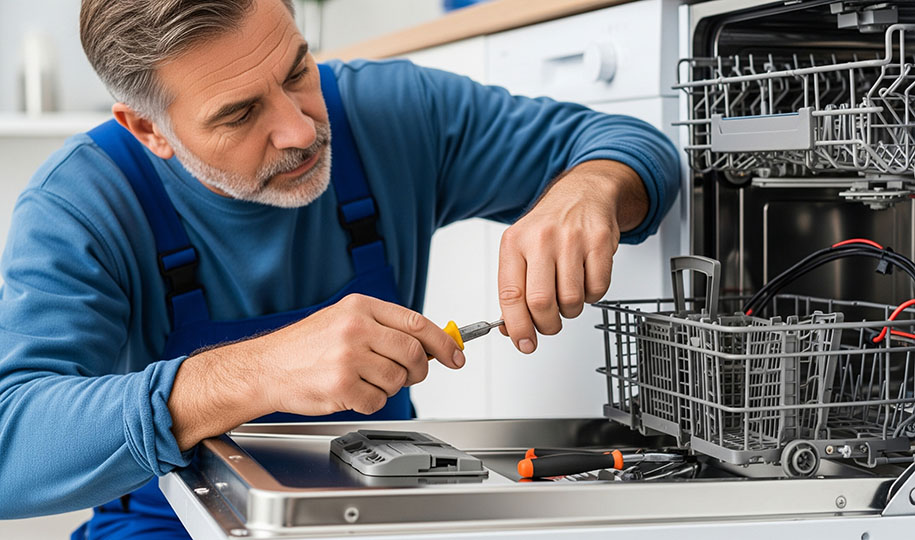
Once the power is off, start by removing the access panel or kickplate from the front of the dishwasher. This panel covers most of the mechanisms within the appliance, such as the pump, motor, and hoses. You can remove the access panel by using a screwdriver to loosen the screws holding it in place.
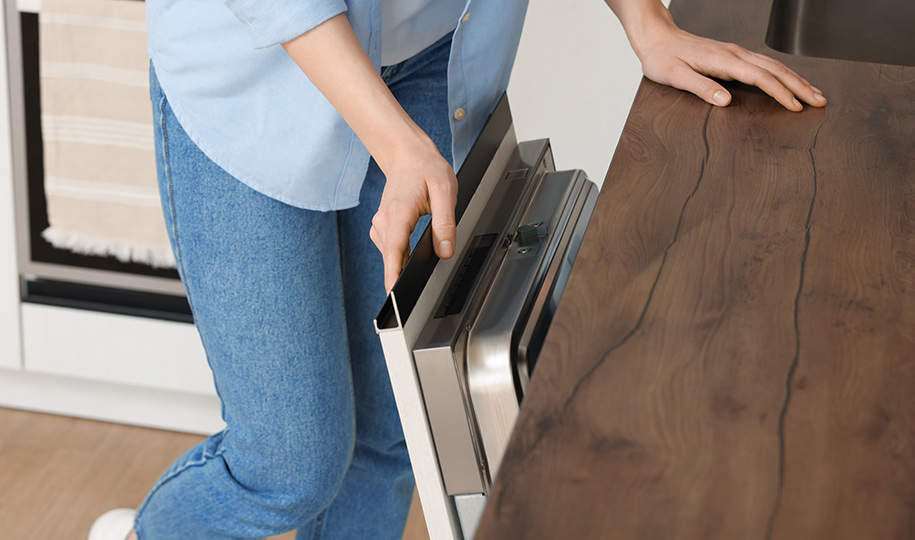
Dishwasher leaking most often comes from around or under the unit's door, but some come from underneath, so be sure to check both places. If your dishwasher is leaking from the door, the issue is likely related to the gasket, spray arm, or float. If the dishwasher is leaking underneath, the problem could be caused by the pump, hoses, or water inlet.
Below, we'll touch on the potential issues that could be causing a leak and how to diagnose and fix each one.
Check & Replace Door Seals
A damaged rubber gasket around the dishwasher door is a common cause of leaks. When the seal is new, it keeps the unit watertight. However, the gasket can dry out or even crack over time, allowing water to leak out. Food debris and mildew can also build up along the edge of the seal, keeping the door from closing as tightly as it should.
To see if a dishwasher seal is leaking, open the door and run your hand along the gasket to look for food particles, cracks, or any tears or missing pieces. If you notice cracks or tears in the rubber material, it's time to replace the gasket seal by following these steps:
- Review your owner's manual to find the dishwasher's model number. Use this information to purchase the correct replacement part from the manufacturer or a home improvement store.
- Remove the old gasket by peeling it away from the dishwasher door.
- Clean the area with warm, soapy water.
- Take the new door seal and warm it by using a hairdryer set on low. Doing so makes the rubber material more pliable and easier to install.
- Position the seal along the top of the door and press firmly and evenly on the top and both sides.
- Close the door of the dishwasher to seal the gasket tightly.
Find more ways to keep your dishwasher in proper running order with our Guide to Dishwasher Maintenance 101.
Inspect & Repair Hoses
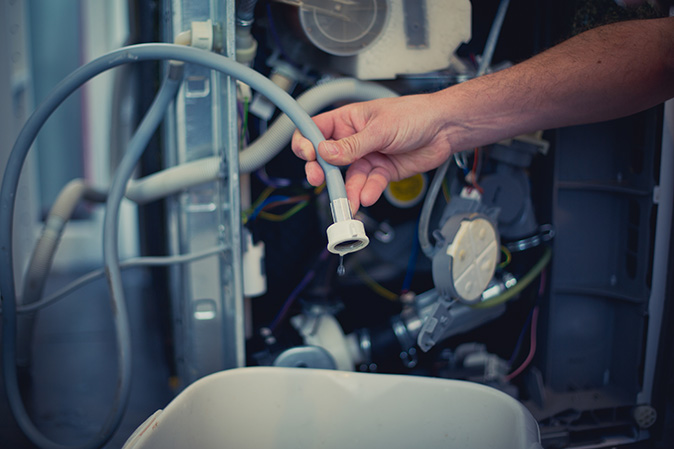
If any of the hoses in your dishwasher are loose or damaged, it can result in a frustrating leak. The drain hose removes water from the appliance and sends it out through the sink drainpipe. A loose connection or cracked hose can cause the drain hose to leak some of that water onto your kitchen floor instead. If your dishwasher leaks when draining, a faulty hose may be the cause.
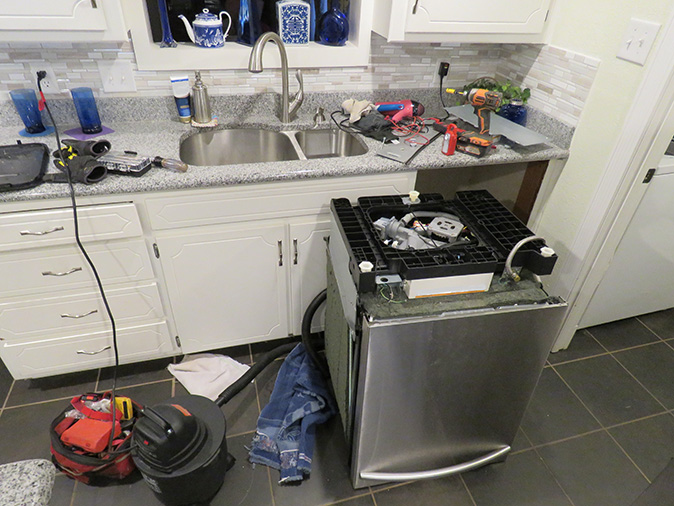
You can inspect the hoses in your dishwasher by removing the kickplate under the door and running a cycle to see if any leaks appear in the drain hose. If the issue is just a few loose fittings, you can easily tighten them yourself. However, if the hose is damaged, you will need to purchase and install a replacement using the steps below.
- Once the cycle completes, shut off all power to the dishwasher.
- Place a shallow pan or dish below the unit to catch any stray water.
- Use pliers to pinch the hose clamp and remove the hose from the pump. Repeat this process on the sink drain side to remove the hose.
- Connect the new drain hose at each end and replace the clamps and panel.
Clear Clogged Drains & Filters
Pieces of food or other debris can easily clog the dishwasher filter or drain, causing water to back up and leading to the dishwasher leaking. You can prevent this problem before it becomes a headache by regularly cleaning your dishwasher and the filter. If you notice a clog causing a leak, remove the filter from the unit and wash it thoroughly in your kitchen sink before replacing it. Find more detailed instructions in our article, How to Clean a Dishwasher Filter in 5 Easy Steps.
If a clogged drain is the issue, you can clear it with a mixture of 50% baking soda and 50% vinegar. Pour this solution into the drain at the bottom of the dishwasher and allow it to sit for about 15 minutes. Then pour hot water into the drain and run a rinse cycle.
Since the sink and dishwasher are connected, an issue with the garbage disposal can cause a leaking dishwasher. Explore our Garbage Disposal Safety Tips to learn how to use the disposal properly to avoid leaks.
Proper Dishwasher Installation
Sometimes a dishwasher leaking from the bottom can be traced back to an incorrectly or improperly installed part. If you notice excess water in the dishwasher's tub, there may be an issue with the drain line. Review your owner's manual to check that the drain hose position and connection are correct, as well as the position of the hose clamp. If everything looks correct, it's probably time to call a professional.
Your dishwasher must be level to perform properly. If it isn’t level, water could overflow out of the top and beneath the door. Fortunately, you can easily level it yourself by following these steps:
- Remove the anchor screws on the cabinet.
- Turn the fasteners to remove the lower kick panel.
- Remove the panel and sound insulation but pay attention to how they’re installed so you can replace them correctly later.
- Adjust the dishwasher’s leveling legs up or down until the unit sits square in the cabinet and is supported by the rear wheels.
- Use a level tool to make sure the dishwasher is level.
- Reinstall all the pieces and turn the power back on.
When to Get Help and Maintenance Tips
If none of these DIY solutions fix your dishwasher leak, or if you don't feel comfortable figuring out how to fix a leaking dishwasher yourself, don't hesitate to contact a professional technician.
Fortunately, there are a few simple ways you can help extend your dishwasher's lifespan:
- Regularly clean the interior of your dishwasher, especially the filter, removing any larger pieces of food or other debris. Read all about How to Tell When Your Water Filter Needs Replacing.
- Avoid overfilling the dishwasher.
- Consider washing some dish loads by hand to limit the number of times you run your dishwasher.
With a home appliance warranty from First American, you can protect your budget and the appliances and systems in your home and get help when you find your dishwasher leaking. Contact us today to learn about our available plans or get a free home warranty quote.
The contents of this article are provided for general guidance only. First American Home Warranty does not assume any responsibility for losses or damages as a result of using this information.
Please be aware that if you disassemble a covered system or item, it can invalidate your home warranty or manufacturer's warranty.

Keep Reading




Home Care Buzz Experts
The First American Home Care Buzz team is made up of experienced home warranty writers and editors. Our team provides valuable insights and information to help homeowners like you meet the daily challenges of homeownership.
This article is about...