
Why Is Your Air Conditioner Leaking Water? 4 Possible Causes
APRIL 09, 2025 | Home Care Buzz Experts | 5 minute read
Project Overview

Intermediate

3 Hours

< $150
All Values are Estimates
Noticing water pooling around your air conditioning unit can be alarming, but it’s a common issue with several possible causes. A leaking air conditioner – whether inside or outside your home – can lead to more significant problems if left unchecked, including water damage and costly repairs.
The good news? Many leaks are easy to diagnose and fix without calling a technician. In this guide, we’ll break down the most common reasons your AC might be leaking and how to solve each issue to keep your system running smoothly.
Why Is Your AC Leaking Water (and How to Fix It)
There are many ways to identify and solve your AC dripping water problem, from checking air filters and drainpipes to pumps and pans. Here are four areas to check and corresponding solutions to try, before calling an expert.
1. Blocked Drain Line
This is a good first place to check, as a clogged condensate drain line is one of the most common reasons for a leaking air conditioner. The water collected by your air conditioner contains dirt and debris. That debris, and even mold or algae growth, can block the drain, causing water to back up and overflow inside your home.
Solution: Unclog the Drain Line
To fix a clogged drain line yourself, you’ll take the following steps:
- Turn off your HVAC or AC unit at the thermostat and flip off the circuit breaker for the system.
- Locate the drain pan to check for standing water.
- Use a wet/dry vacuum to remove the standing water and thoroughly clean the drain pan to prevent mold growth.
- Find the drain line and check if it is clogged. If it is, you need to clean the drain line. To do this, locate the drain line at the unit’s base and remove the cap. Use a wet/dry vacuum or pipe cleaner to suction out any blockages in the drain line.
- Once unclogged and clean, you can also pour a mixture of vinegar and water down the drain to kill any algae or mold growth causing the blockage.
- Rinse thoroughly by pouring a small amount of clean water through the line, and ensure it seamlessly flows out of your house.
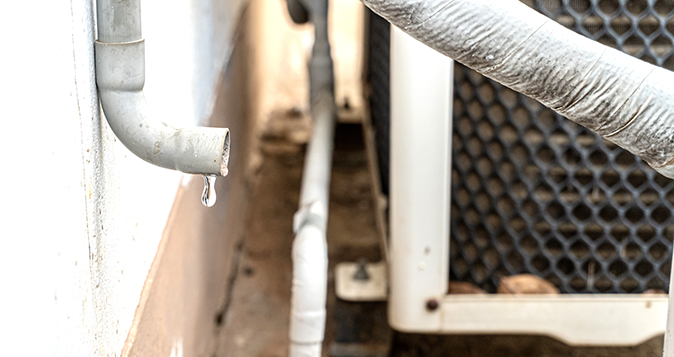
2. Damaged Condensate Drain Pan
The condensate drain pan collects water and is located underneath your AC unit below the evaporator coils. While a simple job, the drain pan can still become damaged or corroded, causing water to leak from the unit. Water vapor is supposed to flow into the drain line and outdoors.
However, if the drain pan is damaged or rusted, the water will start to leak from the pan instead of traveling down the drain line.
Solution: Seal Cracks or Replace the Drain Pan
If you have a cracked drain pan, it must be carefully and securely resealed to prevent your AC leaking water. Here is a list of steps you can follow:
- First, put on safety goggles and clean the drain pan well using a bleach and water mixture to remove algae and mold.
- Next, pour water to help identify any cracks as the water runs.
- Once you identify any cracks, use a high-quality, water-resistant sealant to seal the cracks.
- After the proper cure time, test the seals by pouring water on the pan again to see if any leaks still occur. Repeat until there are no more leaks.
If the drain pan is rusty and beyond repair, then you will need to do an AC drain pan replacement. But it’s not as simple as removing the old pan and sliding in a new one. It must be the right size for your unit to work efficiently. If you have a hard time finding the correct size pan or find it difficult to replace, contact an HVAC professional to assist in finding and installing the appropriate one.
3. Clogged Air Filter
One of the most common causes of a leaking air conditioner is a dirty or clogged air filter. The filters ensure proper air circulation and allow clean air to enter your house.
However, particles and dust accumulate on the filters and clog them completely over time. A dirty air filter restricts airflow and causes the evaporator coil to freeze up, leading to excess condensation and water leakage.
Solution: Replace the Air Filter or Clean It
Here are the steps to follow when you need to replace or clean your air filter:
- Turn off the power to the AC.
- Clean any standing water with a vacuum or towels to protect your walls and floor.
- Remove the panel that houses the air filter and inspect the filter to see if it needs to be cleaned or replaced with a new one.
- If you have a washable air filter, brush it lightly with a rag into a garbage bag to capture any gunk or debris. Then, rinse the filter under lukewarm water before letting it dry completely.
- Once dry, put it back in your unit facing the appropriate direction of airflow. (Look for arrows on the filter frame to place it correctly.)
If you have a replaceable filter, then you need an air filter replacement. Simply head to your nearest hardware or box store to find your replacement filter. Be sure to choose the correct size and type of filter for your unit, or your system will not filter properly.
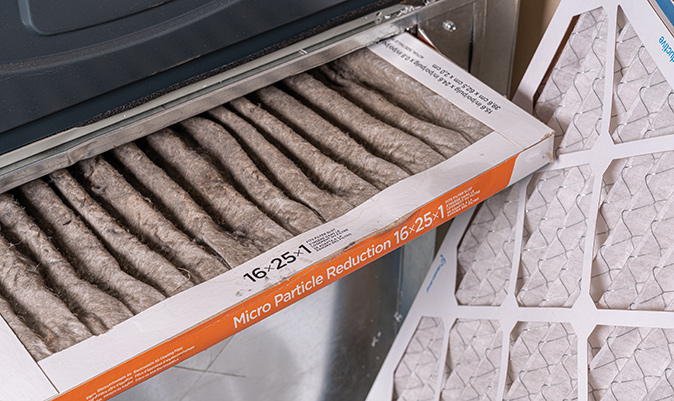
4. Frozen Evaporator Coil
If your air conditioner’s evaporator coil freezes due to low refrigerant levels or poor airflow — which is caused by a dirty filter or blocked vents — water can leak once the ice melts. The water may overflow and leak out when it melts.
Solution: Clean the Air Filter and Thaw the Coils
- Turn off the unit and allow the evaporator coils to defrost completely.
- While the coils defrost, take out the air filter and clean it.
- Once the coil is defrosted, clean any standing water and replace the freshly cleaned or new air filter.
- Turn the unit back on and monitor it over the next few hours to ensure that it does not freeze.
As mentioned above, your coils may freeze due to low refrigerant. If there is not enough refrigerant to run through the system, the coils become too cold and can easily freeze. Contact a professional to add refrigerant and ensure that there are no leaks in the system.
Protect Your AC With First American’s HVAC Coverage
Learning how to fix a leaking air conditioner isn’t for everyone. If you’re worried about potential HVAC issues, a home protection plan can help safeguard your budget when breakdowns happen. First American offers plans that cover major home appliances and systems, including your AC.
Get a quote for home warranty coverage today.
The contents of this article are provided for general guidance only. First American Home Warranty does not assume any responsibility for losses or damages as a result of using this information.
Please be aware that if you disassemble a covered system or item, it can invalidate your home warranty or manufacturer's warranty.



Keep Reading



Home Care Buzz Experts
The First American Home Care Buzz team is made up of experienced home warranty writers and editors. Our team provides valuable insights and information to help homeowners like you meet the daily challenges of homeownership.
This article is about...