
How to Replace a Refrigerator Compressor
OCTOBER 16, 2025 | Home Care Buzz Experts | 4 minute read
If your refrigerator is running warm, cycling constantly, or making strange noises, it may not be the thermostat or even the fan. It could be the compressor. Your refrigerator compressor plays a key role in keeping your food cold. When it starts to fail, your fridge can’t stay at the right temperature. While not every cooling issue definitively points to a bad compressor, it’s helpful to know what signs to look for and what your options are.
What Does a Refrigerator Compressor Do?
The compressor is essentially the heart of your fridge. It pumps refrigerant through the coils to remove heat and maintain a cool interior. If the compressor isn’t working correctly, your refrigerator won’t be able to keep the temperature it’s set to. And that means your food may spoil quickly or even become unsafe to consume.
Compressors can wear out over time, usually after years of regular use. When that happens, your fridge may run more frequently, stop cooling altogether, or develop other performance issues.
Signs Your Refrigerator Compressor Is Failing
You don’t need to be a technician to spot the early signs of compressor trouble. Here’s what to look for:
- Warm or inconsistent temperatures inside the fridge or freezer
- Loud humming, rattling, or clicking sounds near the back of the unit
- The refrigerator runs constantly, or sounds different when it’s running
- Food spoils more quickly than usual
If you’ve already checked the thermostat settings, cleared the coils, and cleaned the vents but still notice these problems, it may be time to fix the refrigerator compressor or explore a replacement.

How to Diagnose Compressor Problems
Before assuming the compressor is bad, follow steps 1 and 2 under “How to Replace a Refrigerator Compressor” and try a few basic checks:
- Check for dust or debris around the coils and compressor; clean if necessary
- Listen for clicking or humming sounds from the compressor
If you’re unsure, it’s a good idea to call a technician.
How to Replace Refrigerator Compressors
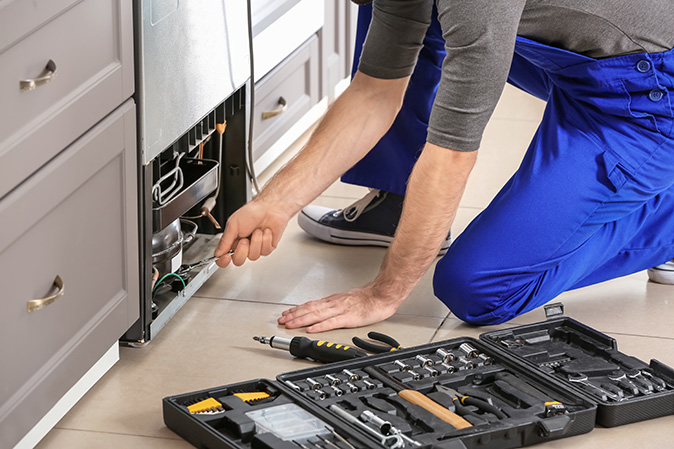
If a technician has confirmed that your compressor has failed, the next step is to replace it. This isn’t typically a DIY job. To install a refrigerator compressor, you must have EPA certification, specialized tools, and advanced knowledge of sealed refrigeration systems. That said, it’s still helpful to understand the process.
Here’s what a refrigerator compressor replacement usually involves:
Step 1: Disconnect Power and Pull the Fridge Away from the Wall
The fridge must be unplugged and moved to create a working space. This also prevents electrical shock during repair.
Step 2: Access the Compressor
The compressor is usually located behind a lower access panel at the back of the refrigerator. A technician will remove the panel and inspect the connected parts, including the start relay, capacitor, and tubing.
Step 3: Recover the Refrigerant
Before removing the old compressor, any remaining refrigerant must be recovered appropriately using a recovery machine. This step is required by law and helps avoid harmful emissions.
Step 4: Disconnect and Remove the Old Compressor
The technician will disconnect the electrical wires and cut or desolder the copper tubing that connects the compressor to the rest of the sealed system. The old compressor is then removed from its mounting base.
Step 5: Install the New Compressor
The new compressor is mounted in place and connected to the existing lines. New copper tubing or fittings may be soldered into place to ensure airtight seals. The start relay, capacitor, and overload protector are also installed or reused, depending on the unit.
Step 6: Replace the Filter Drier
This small but important part filters moisture and contaminants from the refrigerant. It’s almost always replaced during a compressor swap.
Step 7: Vacuum the System
Once sealed, the technician uses a vacuum pump to remove any air or moisture from the system. This step is critical for performance and safety.
Step 8: Recharge the System With Refrigerant
The exact amount and type of refrigerant will depend on the refrigerator model. This step must be done with precise measurement and regulation.
Step 9: Test for Leaks and Proper Cooling
After recharging, the technician checks for leaks, turns the fridge back on, and monitors the temperature to ensure the newly installed refrigerator compressor is working correctly.
How Much Does It Cost to Replace a Refrigerator Compressor?
Wondering how much it costs to replace a refrigerator compressor? The answer depends on your fridge model and labor rates in your area. While a compressor costs about $200 to $400, the replacement is a labor-intensive job. On average, labor and parts to replace a compressor can cost $700 to $1,250.*
At that price point, many homeowners consider replacing the entire refrigerator, especially if it’s more than 10 years old or out of warranty. A new, energy-efficient model might be more cost-effective in the long term.
Is It Worth Replacing a Refrigerator Compressor?
It depends on a few factors:
- If your unit is more than 8 to 10 years old, it might make more sense to buy a new fridge
- If the rest of the fridge is in great shape, it may be worth replacing the compressor
- When in doubt, get a quote for replacing the compressor and weigh that against the cost of a new refrigerator
If the compressor is still under the manufacturer's warranty, you may only need to pay for labor. If your refrigerator is covered by a home warranty, you may be eligible for repair or replacement of covered parts, depending on the terms of your plan.
Keep Your Cool With a Home Warranty
A failing compressor can be frustrating and expensive. However, if your refrigerator breaks down due to normal wear and tear, a home warranty from First American Home Warranty with refrigerator coverage can help take care of the repair or replacement.
With a First American home warranty, you’ll have support when covered appliances stop working, whether it's your refrigerator, dishwasher, or another essential appliance or system.
Learn more about what’s covered and get a free quote today.
*Cost data is from research and project costs reported by HomeGuide members.
The contents of this article are provided for general guidance only. First American Home Warranty does not assume any responsibility for losses or damages as a result of using this information.
Please be aware that if you disassemble a covered system or item, it can invalidate your home warranty or manufacturer's warranty.


Keep Reading


Home Care Buzz Experts
The First American Home Care Buzz team is made up of experienced home warranty writers and editors. Our team provides valuable insights and information to help homeowners like you meet the daily challenges of homeownership.
This article is about...