Should You Wash Your Walls? A Homeowner's Guide
NOVEMBER 01, 2024 | Home Care Buzz Experts | 6 minute read
Just like other surfaces in your home, walls need to be washed to keep them sanitary and looking great. However, unlike floors, countertops, and fixtures like sinks and toilets, they typically don't become uniformly dirty or need to be cleaned as often.
Common Causes of Wall Grime
Over time, you may notice walls in high-traffic areas become grimy from food residue, pet stains, makeup, and even natural oils from your own hands. This can be especially true for areas around light switches and thermostats, where people accidentally spread filth when in a hurry. And if you have kids, you may be surprised at the things that end up on your wall.
Special Considerations for Cleaning Walls
Knowing how to wash walls is different than cleaning kitchen appliances or the typical bathroom cleaning you're used to. The walls in your home are porous and absorb moisture, and can also be damaged by cleaning products containing bleach and other common household cleaners.
In this guide, we'll walk you through how to wash a wall of any variety in your home and make some recommendations for cleansers that will make it look practically new.
Cleaning Solutions for Washing Walls
Before you begin, you should know what to wash walls with depending on the type of wall, to avoid damaging the finish. And you don't want to use just any cleaning agent, like tile cleaner or carpet cleaning solutions. Knowing how to wash walls without removing paint can be very different than cleaning wallpaper, so choosing the appropriate cleaning solution helps prevent damage that's more serious than the dirt you're trying to remove.
- Painted walls: A mixture of warm water and a small amount of dish soap or vinegar should be enough to clean average grime from walls without damaging or removing any paint.
- Drywall or sheetrock: Many homes have unpainted drywall in the garage, but you may also have unpainted drywall elsewhere inside your home. To clean unpainted drywall, warm water without soap or vinegar is a good choice to avoid damaging this material.
- Wallpaper: Wallpaper comes in various materials, and not all types of wallpaper can be washed — hopefully, the manufacturer of the wallpaper or the installer left recommended cleaning instructions to help you. However, homeowners commonly use a mixture of warm water and either dish soap, cornstarch, or vinegar. Do not use baking soda or harsh cleansers to clean wallpaper, or you may damage the design.
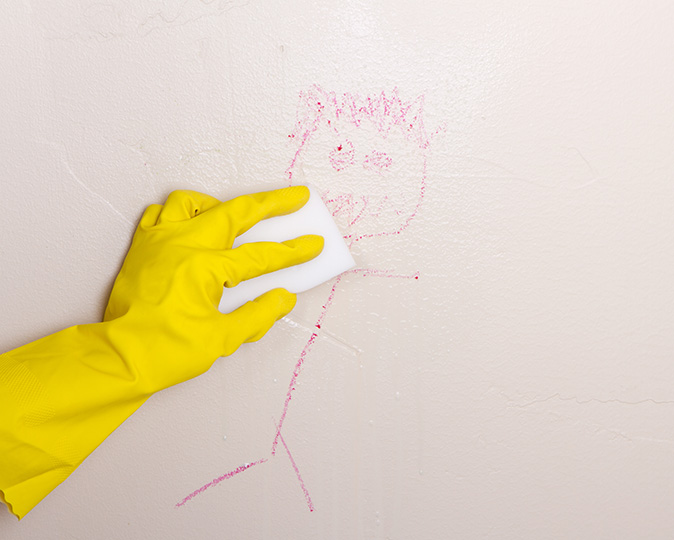
No matter what type of wall you're cleaning, if you're trying to learn how to wash walls fast and there's not much grime, "magic erasers" or interior wall cleaning wipes can be safe and effective options. These specially designed sponges and wipes already contain gentle cleansers that can help you remove small patches of filth in no time. However, they're not always efficient for cleaning entire walls.
How to Wash Walls: Step-by-Step
Whether you're figuring out how to wash painted walls, how to wash bathroom walls, or anything in between, the only thing that really differs is the appropriate cleaning solution. Follow the steps below to wash any interior wall in your home.
Materials:
- A bowl of warm water and your chosen cleanser (dish soap, vinegar, etc.)
- A bowl with warm water for rinsing
- A clean sponge or microfiber cloth
- Multiple towels for protecting floors
- A vacuum with a brush attachment or dusting cloth
Step 1: Prep the Cleaning Area
Place several towels around the wall, pushing them up to the baseboards — you may even want to gently cover the baseboards with the edge of the towels. You want to prevent water from dripping down the wall and collecting where the wall or baseboard meets the flooring. Even small amounts of water left in these tight spaces can create a breeding ground for mold and mildew. Be sure to remove any damp towels from the floor as soon as you're done to prevent the same problem.
Step 2: Dust the Walls
There may be imperceptible dust covering the wall you're about to clean, and you won't notice it until you apply water and the dust begins to clump. To avoid this and make cleaning easier, use a vacuum with a brush attachment to gently suck the dust away, or use a dusting cloth to thoroughly wipe away particles.
Step 3: Test an Area of the Wall
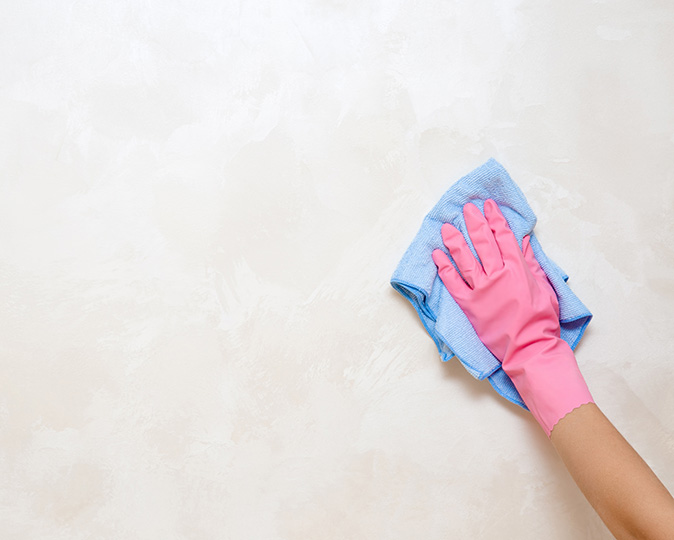
Although the cleaning solutions we previously mentioned aren't likely to damage paint or wallpaper, it's always better to stay on the safe side. Dip your microfiber cloth or sponge into the cleaning solution and apply it to a small, inconspicuous area of your wall. Wait a few minutes, and if the solution doesn't cause any discoloration, you can continue knowing that this is a good method of how to wash walls without removing paint or other elements.
Step 4: Apply the Cleaning Solution to the Wall
Immerse your cloth or sponge in the bucket of cleaning solution, then wring out most of the water. Apply it in circular motions to the wall, being careful not to press too hard. Applying too much water or pressure during application can damage the wall, especially if it's covered in oil-based paint. Repeat your application until the entire wall has been washed.
Step 5: Rinse the Cleaning Solution
Immerse a separate microfiber cloth or sponge in your bowl of plain, warm water and begin rinsing the cleaning solution. Use the same technique as when you applied the solution, working in gentle, circular motions and ensuring you don't use too much water or pressure.
Step 6: Dry the Wall
Using a fresh cloth or towel, gently dry the wall by patting it down. When you follow the steps on how to wash walls correctly, there shouldn't be enough water applied to permeate the wall treatment. If you live in a warm, dry climate, opening windows can help ensure your wall dries properly.
Need Extra Cleaning Power?
Sometimes, a simple wall wash isn't enough to remove all the messes life throws our way. If there are any stubborn stains left behind after you complete the steps listed above, there are a few more vigorous methods to try. However, none of the tips mentioned below should be used on wallpaper — if you need to remove stubborn stains from wallpaper, consult the manufacturer or a professional cleaner. Be aware that the following methods involve harsher cleansers and should be used with caution.
- Hydrogen peroxide: A small amount of hydrogen peroxide applied to a section of cloth can help dissolve and remove some stubborn, colored stains like those caused by red wine or tomato sauce.
- Baking soda: Usually, baking soda isn't recommended for washing walls as its gritty texture can be too abrasive. However, if you have something sticky — like syrup or even crayons — stuck on the wall, a solution of half a cup of baking soda and a quarter cup of water can be effective.
- Rubbing alcohol: Rubbing alcohol is probably the most abrasive and potentially damaging cleanser you can use on painted walls. However, it is highly effective at removing some of the most serious wall stains, like fireplace soot or permanent markers. If you use rubbing alcohol to clean small areas of your wall, know that you may have to repaint that area afterward.
Pro tip: If you accidentally removed some of the paint while using a cleaning agent, like rubbing alcohol, and need a touch-up, check out our painting tips.
How Often Should You Wash Your Walls?
Environmental and lifestyle factors can affect how quickly your walls get dirty. In living rooms, home offices, and bedrooms, you should clean walls whenever you notice visible grime or dirt. This may be most noticeable around fireplaces, light switches, doorways, and thermostats.
Kitchens and bathrooms are a different story. Washing walls in these areas removes bacteria and improves hygiene while removing dirt in living areas is largely cosmetic. You should wash bathroom walls about once a month, and kitchen walls every one to two months.
Safeguarding Your Home With First American
Following the steps of how to wash a wall can be a chore, but there's not much you can do to protect your walls from dirt and stains. After all, your home's walls protect you against the elements. Using a semi-gloss or glossy paint gives them the best protection and can make cleaning easier, but how do you protect other items that make your house a home?
With First American home warranty coverage, you can safeguard your budget when your major home systems and appliances break down. Grimy walls are inevitable, and so is the normal wear and tear on appliances like your refrigerator, dishwasher, and more. Get a free quote today to discover how you can manage unexpected costs due to breakdowns and focus on keeping your home looking as great as it feels.
The contents of this article are provided for general guidance only. First American Home Warranty does not assume any responsibility for losses or damages as a result of using this information.

Keep Reading