
Washing Machine Maintenance Tips
JANUARY 06, 2026 | Home Care Buzz Experts | 5 minute read
Laundry day is easier when your washer is running smoothly. However, if you skip regular washing machine maintenance, you may notice odors, leaks, or laundry that doesn’t come out as clean — all signs of poor washer performance.
The good news is that keeping your appliance in top shape doesn’t take much time or effort. Once you know what to look out for, it’s easy to learn how to maintain a washing machine and enjoy cleaner laundry, fewer breakdowns, and a washer that lasts longer.
Why Washing Machine Maintenance Matters
Your washer is one of the hardest-working appliances in your home, handling heavy loads week after week. However, over time, detergent, lint, and even minerals from hard water can build up inside. Failing to maintain your laundry machine can have a significant impact on its overall performance. That musty smell in towels? Or the puddle you find on laundry day? These are often signs that your washer needs some care.
When you make time for regular washing machine maintenance, you can:
- Reduce odors and mildew inside the drum
- Prevent clogged hoses and drains
- Keep your laundry cleaner and fresher
- Extend the life of your appliance
Taking just a few minutes each month for simple washing machine maintenance can save you from bigger headaches later, and help your washer keep up with your busy routine. Ready to get started? Here's your step-by-step guide to washing machine maintenance.
How to Maintain a Washing Machine
Every washer is a little different, but most models benefit from the same routine care.
1. Clean the Drum
Run an empty hot water cycle once a month. Add a washing machine cleaner or a cup of white vinegar to help break down soap scum and odors. If you have hard water, consider doing this more often.
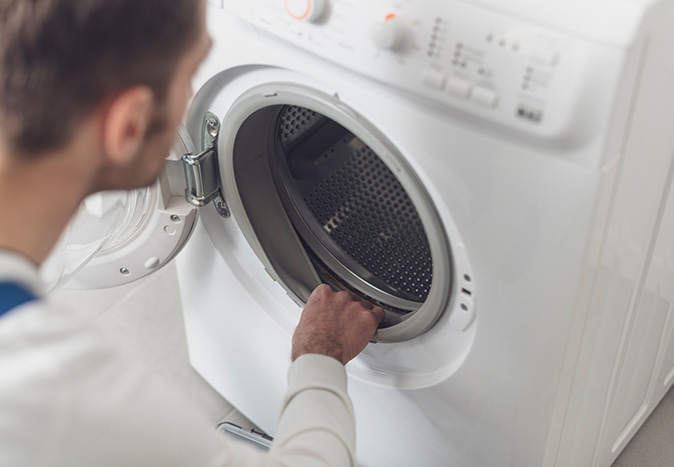
2. Wipe the Gasket
Front-loading machines have a rubber seal around the door. This area often traps water, lint, and dirt. Wipe it dry after each load and give it a deeper clean once a week with a cloth dipped in a vinegar-and-water solution.
3. Check the Hoses
Every few months, check behind your machine and inspect the hoses for leaks, cracks, or bulges. Correcting water damage from a burst hose can be expensive, so replacing worn hoses at the first signs of decay is an easy win for laundry machine maintenance.
Pro tip: If you have rubber hoses, consider replacing them with braided stainless steel ones. By design, they’re more robust, more resistant to bursting, and can last two to three times longer than rubber hoses. Also, consider installing a washer drain pan to prevent water damage.
4. Clear the Lint Filter
Some washers have a small filter that traps debris before water drains. If your model has one, clean it as often as your manual recommends. A clogged filter can cause your washing machine to stop draining properly.
5. Leave the Door Open
Keep the washer door or lid open for at least 30 minutes after each load. This helps air circulate inside the drum, reducing moisture and preventing the growth of mold or mildew.
6. Use the Right Detergent
If you have a high-efficiency washer, always use high-efficiency (HE) detergent, which is a low-suds formulation made explicitly for this type of washer. Conversely, use a regular detergent if you have a regular washer. Don’t swap detergent types — doing so can lead to poor laundry performance and cause damage to your machine.
Not sure which type you have? An HE washer typically has a small HE symbol near the control panel. If you can’t find one, check your manual for the symbol. You can also look inside your washer’s drum and see if there’s a tall agitator in the middle. By design, front-loading and top-loading HE machines typically don’t have agitators.
7. Use the Right Amount
Despite popular belief, adding more detergent won’t get your laundry cleaner. In fact, adding too much detergent can leave residue on your laundry, especially in HE machines that use less water. Extra detergent can also stress your washer since it has to work harder to clear the excess suds. Instead, measure carefully using the cap on your detergent’s container according to the amount of laundry you have.
Practicing these simple habits is the foundation for smart washing machine maintenance.
Extra Tips for Laundry Machine Maintenance
Different types of washers have unique care needs. Here’s what to keep in mind:
- Front-loading washers: Pay extra attention to the gasket and drum, since front-loaders are more prone to moisture buildup.
- Top-loading washers: Avoid overloading. Stuffing the drum too full can unbalance the machine and stress the motor.
- High-efficiency washers: Always use the correct detergent. Using a non-HE detergent creates too many suds, which can clog the washer over time.
Other helpful reminders:
- Wipe down the outside of your washer to prevent dust and grime from collecting.
- Keep the machine level on the floor. An unbalanced washer can vibrate, make loud noises, and cause excessive wear on its parts.
- Wash smaller loads when you can. Lighter loads put less stress on the drum and motor.
Learning how to maintain washing machine parts and surfaces can help your appliance work better and last longer.
Seasonal Deep Cleaning
Once or twice a year, give your washer a deeper clean:
- Pull the machine away from the wall. Check for leaks, dust, or signs of wear behind it.
- Clean the detergent drawer with warm water to remove any built-up soap residue.
- Vacuum around the base and the back of the machine to clear lint and dust.
- If your washer has a self-clean cycle, run it. If not, pour 2 cups of white vinegar into the drum (or detergent dispenser) and run a hot cycle, then add ½ cup of baking soda and run another hot cycle. This one-two punch breaks down soap buildup and eliminates odors.
This seasonal deep clean goes beyond daily laundry machine maintenance and helps prevent hidden issues from building up.
Signs Your Washer May Need Service
Even the best care can’t prevent every problem. Watch for these warning signs that it’s time to call in a pro:
- No spinning or draining
- Standing water inside the drum
- Loud noises or shaking during cycles
- Persistent odors even after cleaning
- Leaks under or around the machine
Identifying these issues early can help prevent bigger problems later. However, even with consistent care, washers eventually face mechanical issues that maintenance alone can't prevent.
Protect Your Appliances With a Home Warranty
Regular washing machine maintenance is one of the best ways to keep your appliance in shape. By incorporating it into your household cleaning routine, you can prevent many common issues before they start. However, even with proper care, breakdowns can still happen. That’s where a home warranty can help.
A home warranty from First American can include the repair or replacement of washers and many additional major home appliances and systems when they break. Our plans help homeowners safeguard their budgets and provide peace of mind when covered items unexpectedly fail.
Get a free quote today and take the first step toward protecting your home with comprehensive home warranty coverage.
The contents of this article are provided for general guidance only. First American Home Warranty does not assume any responsibility for losses or damages as a result of using this information.
Please be aware that if you disassemble a covered system or item, it can invalidate your home warranty or manufacturer's warranty.



Keep Reading




Home Care Buzz Experts
The First American Home Care Buzz team is made up of experienced home warranty writers and editors. Our team provides valuable insights and information to help homeowners like you meet the daily challenges of homeownership.
This article is about...