
Signs of Mold in Washing Machines
OCTOBER 02, 2025 | Home Care Buzz Experts | 4 minute read
If you notice a persistent musty smell or odd spots inside your washer, you may have mold in the washing machine. That unwelcome fungus thrives in warm, damp environments, and modern washers offer just the right conditions.
Here’s how to spot the warning signs, understand the risks, and learn how to clean mold in a washing machine and keep it from coming back.
Why Mold Grows in Washing Machines
Modern washers are efficient, but they’re also prone to mold. Their tight seals, water-saving cycles, and residue from detergent and fabric softeners all create an ideal setting for mold to thrive.
Here’s what makes washers so mold-friendly:
- Trapped moisture: Closed doors and drawers lock in humidity
- Tight seals: Front-loaders have rubber gaskets that hold moisture
- Detergent and fabric softener: Both leave residue that mold can feed on
If those conditions sound familiar, you may already be dealing with mold growth in the washing machine. Here’s how to spot the warning signs.
Warning Signs That Mold Is Brewing
Musty or “Rotten” Odors
When you open the washer door, a sour, damp, or rotten-egg smell can signal mold growth inside. Odors are prime indicators of mold buildup.
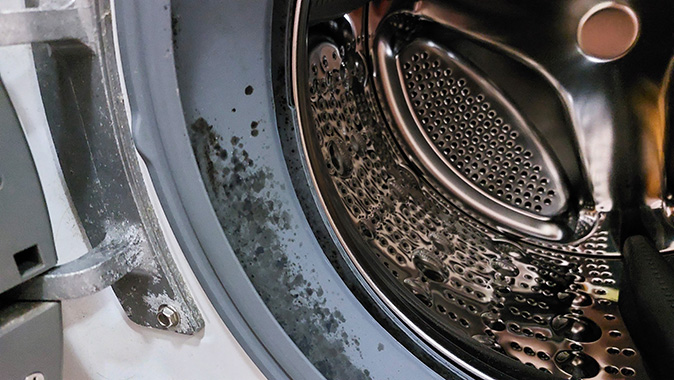
Black, Green, or Gray Spotting
Check the rubber gasket, detergent drawer, and drum walls for dark streaks or spots, especially in crevices. Mold thrives in the folds of front-loader door seals.
Residue Build‑Up
Soap scum, limescale, or leftover detergent crusting on internal parts creates ideal food for mold. Chalky drum deposits, slimy drawer residue, or a tacky seal are all red flags.
Allergy Symptoms
Some people have respiratory issues, sneezing, and itchy eyes after using a mold‑ridden washer. Mold spores released during cycles can aggravate asthma and allergies. Keep an eye out for these symptoms.
Health Risks of Ignoring It
Mold in your washing machine isn’t just unpleasant. It can also affect your health. Ongoing exposure to mold may lead to:
- Respiratory issues like coughing, wheezing, or shortness of breath
- Allergic reactions, including sneezing, itchy eyes, or skin irritation
- Clothing irritation, since mold spores can transfer to your laundry
How to Clean Mold in Washing Machines: Step‑by‑Step
If you’ve spotted signs of mold or are worried about the health risks, there’s good news. You can clean your washing machine of mold with a few simple steps. These methods can also help stop it from coming back.
Here’s how to get rid of mold in washing machine parts and keep things fresh:
Step 1: Gear Up and Prep
- Wear protective gloves (nitrile or latex)
- Use a mask if you’re sensitive to mold spores
- Make sure the washer is empty, and leave the door and detergent drawer open
Step 2: Focus on the Gasket and Hidden Spots
- Mix one of these cleaners:
- Equal parts of white vinegar and water, or
- A 10% bleach solution (1 part bleach to 9 parts water).
- Spray the solution or soak paper towels in it, then press them into the gasket folds for 15 to 30 minutes. Scrub the area with a soft cloth or toothbrush.
Warning: If you’re using a bleach solution, it’s a good idea to use protective eyewear, a mask, and gloves.
Step 3: Clean the Detergent Drawer
- Remove the drawer and soak it in hot, soapy water or a vinegar or bleach solution.
- Use a brush to clean out all the crevices, but be cautious of splashes.
- Rinse and dry before replacing it.
Step 4: Run a Cleaning Cycle
Set your washer to the hottest water setting or use the “sanitize” or “tub clean” cycle. Choose one of the following:
- Add 2 cups of white vinegar to the drum and ¼ cup of baking soda to the detergent tray.
- Or pour 1 cup of bleach into the dispenser.
- Let the cycle run completely, then leave the door open afterward.
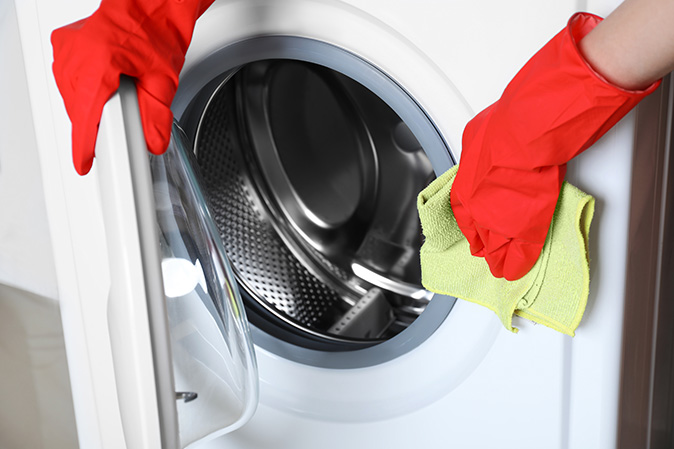
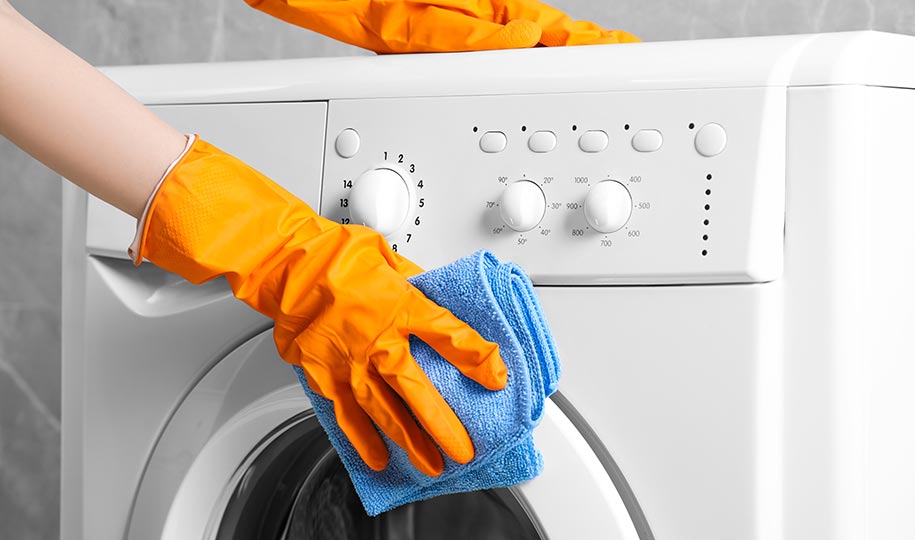
Step 5: Wipe Down the Inside
After the cycle finishes, use a clean microfiber towel to wipe the drum, gasket, door, and detergent area.
Step 6: Let it Dry Out
Keep the door and detergent drawer open for a few hours to allow everything to dry completely.
Step 7: Repeat if Needed
If mold or odors persist, repeat the cleaning cycle and spot scrubbing. Ongoing issues may indicate the presence of mold inside hoses or other parts that require professional attention.
How to Prevent Mold Return
Consistency is key. These habits can help you avoid mold in washing machine parts over time:
- Leave the door and detergent drawer open after every load
- Remove wet clothes promptly. Don’t let them sit in the washer
- Run a hot cleaning cycle once a month
- Use the correct amount of detergent, and skip fabric softener when possible
- Wipe down the drum and seals regularly, especially in front-load washers
- Ventilate your laundry area using a fan or dehumidifier if needed
When a Cleaning Isn’t Enough
If mold in your washing machine keeps returning, the issue may be more than just a surface-level problem. Mold can develop inside hoses, valves, or other internal parts you can’t easily reach. This can affect how your washer runs and may even lead to more significant mechanical problems down the line.
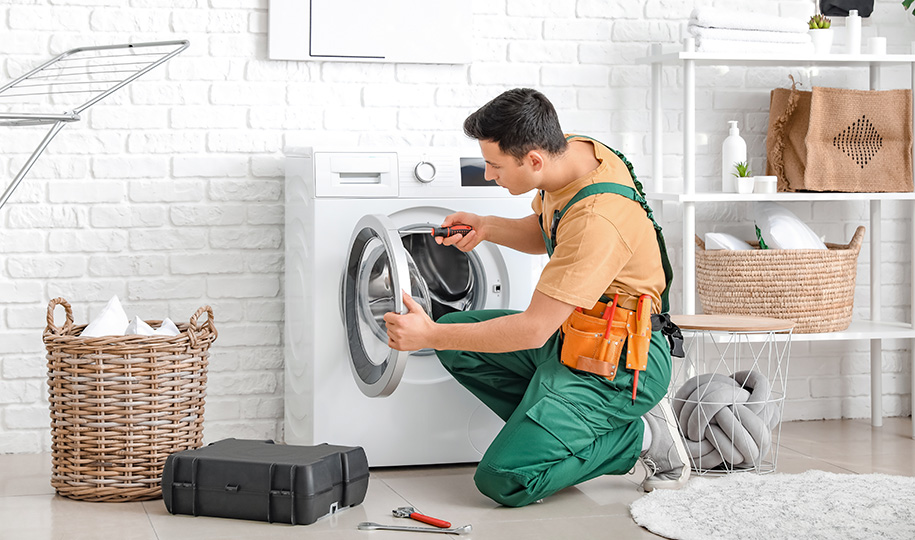
You may want to reach out to a technician if:
- A musty smell lingers even after deep cleaning
- Mold is visible inside the drum or behind sealed panels
- You notice leaks, standing water, or drainage issues
Protect Your Washer Before Problems Start
Regular maintenance can help prevent mold in your washer, but if something else goes wrong, it’s good to have coverage you can rely on.
A home warranty from First American Home Warranty can help take care of covered repairs or replacement when your washer stops working, so you’re not left dealing with costly breakdowns on your own. Discover what’s included and see how a plan could help protect your home’s most-used appliances. Get your free quote today.
The contents of this article are provided for general guidance only. First American Home Warranty does not assume any responsibility for losses or damages as a result of using this information.
Please be aware that if you disassemble a covered system or item, it can invalidate your home warranty or manufacturer's warranty.

Keep Reading




Home Care Buzz Experts
The First American Home Care Buzz team is made up of experienced home warranty writers and editors. Our team provides valuable insights and information to help homeowners like you meet the daily challenges of homeownership.
This article is about...