
Pros and Cons of a Compact Washer and Dryer: What to Know Before You Buy
MAY 03, 2024 | Home Care Buzz Experts | 5 minute read
If you don’t have a laundry room and are tired of trekking to the laundromat, a compact washer and dryer may be the perfect fit. Manufacturers design these small units to fit into tight spaces more easily than standard washers and dryers, letting you clean your clothes while maximizing every square inch of your house or condo.
Use this guide to help you determine whether these space-saving units are the right choice for you.
Advantages of Compact Washers and Dryers
Standard-sized washers and dryers simply don’t work for everyone. And some people just prefer the advantages that smaller units offer. Learn why small washer and dryer units can be the best laundry solution for various types of homes.
Space Saver
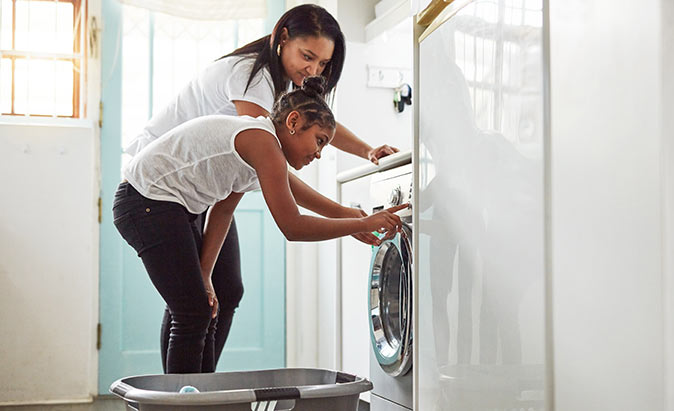
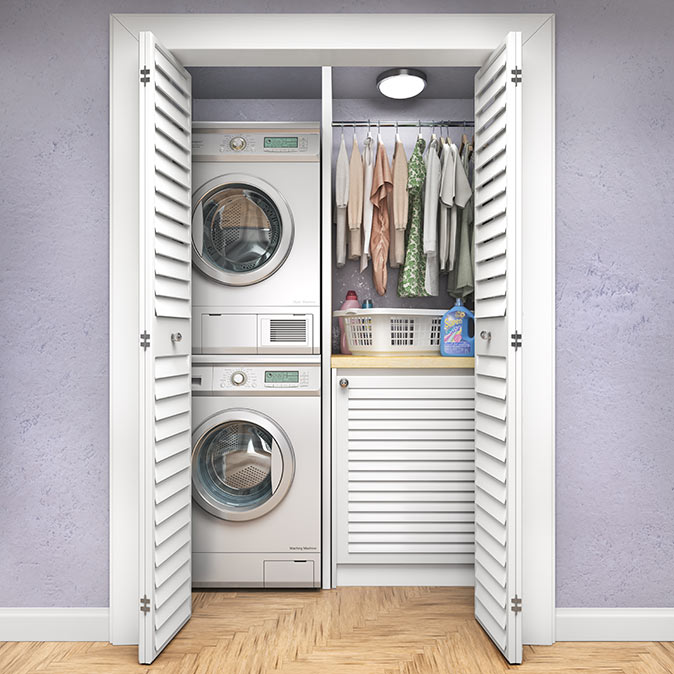
The most significant advantage of a compact washer and dryer is that they save space. Many are designed to fit under a kitchen countertop, in a bathroom, or stacked on top of each other in a large closet. You can even purchase compact washer/dryer combo units, usually called “all-in-one,” that serve both purposes. They take up half the space while still providing full laundry capabilities.
Portability
If you don’t have room for a designated laundry space in your home, like in a closet or under a countertop, or lack the necessary hookups for these appliances, there’s good news. Just look for a portable washer and dryer. These washers and dryers often have wheels or casters that make moving them around the house easy, depending on storage capabilities or where you want to use them that day.
Portable washers only need an electrical outlet, a cold water faucet, and somewhere for the water to drain into, like a bucket, sink, or tub. Portable dryers require only an electrical outlet and a vent exhaust kit (or a window to vent to outside).
Similar Features as Full-Sized Models
A small washer and dryer should have many of the same features available in full-sized models. Many compact washers have sanitization cycles, bleach dispensers, Wi-Fi capabilities, and cleaning performance that matches any full-size washer.
Ventless Convenience
Not all homes or apartments, especially older ones, have vent ducts for dryers. Thankfully, you can find mini washer and dryer units that have a ventless dryer. Ventless dryers don’t require a long, cumbersome hose that vents to the outside — just a reservoir to collect the condensation.
Challenges of Compact Washers and Dryers
Although compact models have significant benefits, it’s good to be aware of the potential drawbacks of these small but mighty appliances.
Smaller Load Capacity
It’s no secret that the smaller the washer and dryer, the smaller your loads will need to be. Regular-capacity washers are about 3 to 4 cubic feet, meaning they can hold up to 16 pounds of laundry. An apartment-size washer and dryer typically hold half that — up to about 8 pounds of laundry.
Longer Drying Times
Many compact dryers are ventless because of where they are used: tight spaces and small or older homes that might not have the capacity for ductwork. While these more convenient appliances save space, they don’t save time. Ventless dryers take longer to dry clothes — sometimes up to 2.5 hours for a single load.
To counterbalance the extended drying time, consider purchasing a compact washer with higher spin speeds that will extract more water from your clothes. Some of the best compact washing machines on the market feature a 1400 rpm spin rate.
Portable Washers Have Some Potential Downsides
If you choose a portable washer and dryer, the washer can have some disadvantages. For one, portable washers have noisier spin cycles, so if you share a wall with a neighbor, some apologies might be in your future. Second, these washers have plastic drain hoses that can be finicky and don’t last as long as those made from other materials. To avoid leaks or flooding, purchase a high-quality, well-rated portable washer with an auto shutoff safety feature.
Note: Home warranties do not cover portable washer and dryer units.
Higher Cost
Although compact washer and dryer units are smaller than standard models, they can cost more. But that extra cost might be worth the convenience, especially when compared to the costs of building additional space onto your home and installing dryer vents.

Space-Saving Solutions and Installation Tips
When it comes time to place a compact washer and dryer in your home, there are a few best practices and tips to remember.
Reduce Vibration
Correct installation is critical for small washers and dryers. A front-loading compact washing machine vibrates more than a standard model, causing a lot of movement and even more noise while operating. Here are some tips for reducing vibration:
- Ensure the unit is balanced and installed level with the floor.
- Put rubber pads under the washer (also called anti-vibration pads).
- Use a lower spin speed.
- Remove shipping bolts before installing.
Review our troubleshooting guide for more washer-dryer tips.
Add a Counter to Front-Loading Machines
Add a counter to your front-loading apartment-size washer and dryer to maximize your usable spacer. Use it as a laundry folding center or simply an additional bathroom or kitchen countertop.
Front-loading machines typically require more upkeep than top-loading models, so make sure you perform routine washer and dryer maintenance to extend the lifespans of these appliances.
Get a Stacking Kit
If you purchase stackable units, check if they include a stacking kit, which helps ensure that the washer and dryer combo are properly installed on top of each other.
Check Your Outlets
Before buying, check the electrical outlets near where you want to install your small washer and dryer. If you only have a standard three-prong outlet, you’ll need to buy a dryer that only uses up to 120 volts.
Additionally, many small spaces only have one outlet, which impacts your ability to plug in two units. In this case, you have two options:
- Buy a washer that can plug into the dryer
- Purchase a combination washer-dryer.
Efficiency and Environmental Considerations
The best compact washers and dryers use less water and energy and save you money on utility bills. To ensure you purchase the most efficient model, look for the blue Energy Star label, which certifies that your unit meets strict energy efficiency standards. These units use 25% less energy and 33% less water than non-certified models.
One specific feature to look for in a compact dryer is a heat pump instead of a condenser. Heat pumps remove moisture more efficiently, so they use less energy.
Market Trends and Consumer Preferences
Compact washer and dryer units might seem like they’re only for apartment dwellers or those living in old homes, but even new houses are being built smaller. According to a Zillow report, construction of smaller, attached homes was up 3% in 2022, while construction of larger, detached homes was down 12%. The reasons for more restrained home construction aside, compact appliances are the answer to homeowners’ small-space concerns.
Learn how home warranty coverage from First American Home Warranty can protect your appliances and your budget. Get a free quote today.
The contents of this article are provided for general guidance only. First American Home Warranty does not assume any responsibility for losses or damages as a result of using this information.

Keep Reading



Home Care Buzz Experts
The First American Home Care Buzz team is made up of experienced home warranty writers and editors. Our team provides valuable insights and information to help homeowners like you meet the daily challenges of homeownership.
This article is about...